
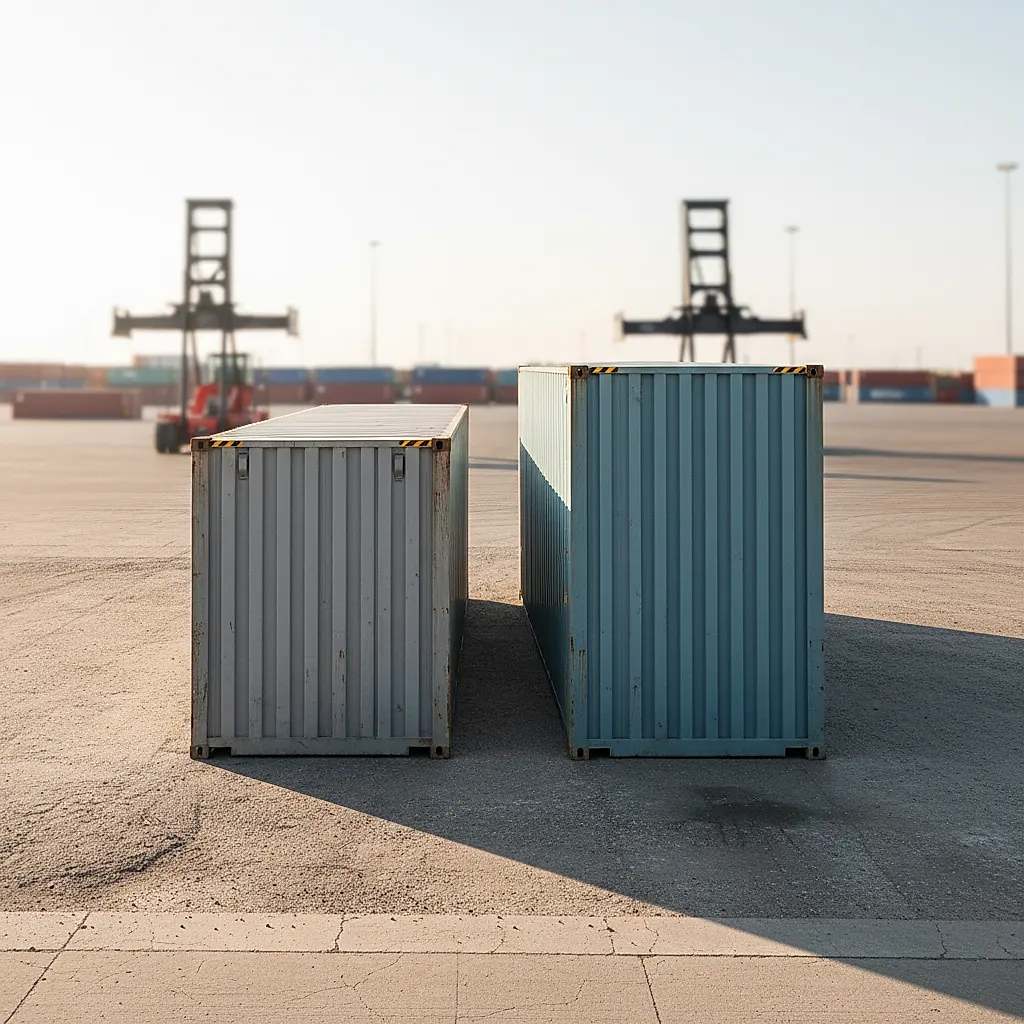
Compare 40ft high cube and standard containers for storage, modification, and site planning. Learn how height affects usability, delivery, and long-term value.
Understanding the two 40ft container options
When you need a full-size shipping container, the two most common choices are the 40ft standard and the 40ft high cube. Both share the same nominal footprint—about 40 feet long and 8 feet wide—but they differ in height. A standard container is approximately 8 feet 6 inches tall on the outside, while a high cube adds roughly one extra foot of interior height. That difference sounds small, but it changes how the container feels inside, what you can store, and how it fits on a site.
This article explains the practical differences between 40ft high cube and 40ft standard containers. It covers interior space, common uses, delivery considerations, and the questions you should ask before buying. It does not quote prices or availability because those change with market conditions, condition grade, and location. For current pricing and stock, confirm details with the Newport team.
Interior space and how height changes usability
Nominal dimensions to expect
Container dimensions are usually described in nominal terms. A 40ft standard container is about 40 feet long, 8 feet wide, and 8 feet 6 inches high externally. A 40ft high cube is about the same length and width but roughly 9 feet 6 inches high externally. Interior dimensions vary slightly by manufacturer and condition, so always check the individual listing or the CSC plate on the container for exact figures.
The extra foot of height in a high cube translates to more cubic capacity. That matters when you are storing bulky but light items, such as furniture, insulation, or packaging materials. It also matters if you plan to build out the interior with shelving, a workshop, or a living space, because headroom affects comfort and code considerations.
What the extra height feels like
Inside a standard container, an adult of average height can stand upright with a few inches to spare. Inside a high cube, there is noticeably more headroom. If you will spend time working inside, the high cube often feels less cramped. If you only need weather-tight storage for palletized goods, the standard height may be perfectly adequate.
Weight and payload considerations
A container's payload capacity depends on its tare weight and the maximum gross weight allowed. High cube containers are often slightly heavier than standard containers because of the additional steel, but the difference is not always significant. Do not assume a specific payload number. Check the CSC plate and the listing for the exact tare weight and payload for the unit you are considering. Also confirm weight limits for the route and site where the container will be placed.
Common uses for 40ft standard and high cube containers
Storage and inventory
Both sizes work well for storage. A 40ft standard container is a common choice for palletized goods, tools, and equipment that fit within standard racking heights. A 40ft high cube gives you more vertical room, which can reduce the number of containers you need if your goods are tall or if you want to stack shelving higher.
Modification and conversion projects
High cube containers are often preferred for conversions because the extra height allows for insulation, flooring, and ceiling finishes without making the interior feel too low. Standard containers can also be modified, but the finished interior height may be more limited. If you are planning a workshop, office, or living space, discuss your design with a builder who understands container modifications and local building requirements.
Construction and job site use
On job sites, both sizes are used for secure storage and temporary offices. A high cube may be useful if you need to store tall equipment or create a more comfortable workspace. A standard container may be easier to handle in areas with height restrictions, such as under overhead lines or in tight yards.
Delivery and site planning differences
Height clearances
A high cube container is taller, so it needs more vertical clearance during delivery. Trees, bridges, overhead wires, and building eaves can all affect whether a truck can place the container where you want it. A standard container may fit under obstacles that a high cube cannot. Before you order, walk the delivery route and note any low branches, wires, or structures. The Newport delivery team can review site access and any specific requirements.
Ground conditions and placement
Both containers need a firm, level surface. A high cube has a higher center of gravity when loaded, so stable ground is especially important. If you are placing the container on grass, gravel, or a slope, consider a prepared pad of compacted gravel or concrete. Confirm with the delivery team what surface they require and whether they can set the container directly on your site.
Door swing and access
Container doors swing outward and need clear space in front. A high cube does not change the door width, but the taller opening may make it easier to move tall items in and out. Make sure you have enough room for the doors to open fully and for a forklift or pallet jack to approach.
Permits and local rules
Some locations have rules about temporary or permanent container placement, including setbacks, screening, and height limits. A high cube may be treated differently from a standard container in some jurisdictions, but do not assume either way. Check with your local planning or zoning office before you buy. Newport can share general information, but only your local authority can confirm what is required for your property.
Condition, features, and what to inspect
New, used, and one-trip containers
Containers are sold in different condition grades. New or one-trip containers are generally the cleanest and most rust-free. Used containers may show signs of wear, including dents, surface rust, and previous repairs. The condition affects appearance, lifespan, and suitability for modifications. Ask for photos and a description of the specific unit you are considering.
Key features to check
- CSC plate: Shows the container's safety approval and key specifications. Verify it is present and legible.
- Doors and seals: Check that doors open and close smoothly and that gaskets are in good condition.
- Floor: Look for soft spots, delamination, or moisture damage.
- Roof and walls: Inspect for holes, rust, and previous patches.
- Ventilation: Some containers have vents; others do not. Consider whether you need airflow for your stored goods.
- Locking system: Confirm the locking bars and handles work properly.
Modifications and additions
If you plan to add shelving, lighting, or climate control, discuss your plans before purchase. Some modifications can affect the container's structural integrity or warranty. For high cube conversions, the extra height can make it easier to run wiring and insulation, but you still need to follow local codes and good building practices.
Frequently Asked Questions
Is a 40ft high cube always more expensive than a 40ft standard?
Not necessarily. Pricing depends on condition, availability, location, and market conditions. In some markets, high cube containers may be more plentiful and therefore priced competitively. In others, standard containers may be more common. Do not rely on general assumptions. Check current listings and confirm pricing with the Newport team.
Can I use a 40ft high cube for the same projects as a standard container?
In many cases, yes. Both can be used for storage, job site offices, and modifications. The main differences are interior height, exterior height, and delivery clearance. If your site has height restrictions or you do not need the extra headroom, a standard container may be the better fit. If you need more vertical space, a high cube may be worth considering.
Does a high cube container require a special trailer or crane?
Delivery equipment depends on the container size, weight, and site access. High cube containers are taller but not necessarily heavier than standard containers. The delivery team will determine what equipment is needed based on your site. Do not assume that a high cube automatically requires a crane or a specific trailer. Discuss your site conditions with Newport before delivery.
How do I verify the exact dimensions and weight of a container?
Ask for the individual listing details and check the CSC plate on the container. The CSC plate shows the maximum gross weight, tare weight, and other specifications. If you need precise interior dimensions for a modification, measure the container yourself or ask the seller for measured drawings. Do not rely on nominal dimensions alone for critical design work.
Can I place a 40ft container on my property without a permit?
Permit requirements vary by location and intended use. Some areas allow temporary placement without a permit, while others require approvals for permanent structures. Do not assume that one container size needs fewer permits than another. Contact your local planning or zoning office to confirm the rules for your property.
Making the decision: standard or high cube?
Start by defining your needs. If you need maximum interior height for storage or conversion, a high cube may be the better choice. If you have height restrictions on your delivery route or do not need the extra headroom, a standard container may be sufficient. Consider the following decision points:
- What will you store or build? Tall items and finished interiors often benefit from a high cube.
- What is your site access like? Check for overhead obstacles and ground conditions.
- What is your budget? Compare current prices for both options, but do not assume one is always cheaper.
- What condition do you need? New, one-trip, and used containers are available in both heights.
- What do local rules require? Confirm zoning, setbacks, and height limits with your local authority.
Next steps
Ready to compare options? Browse our current inventory at our shop to see available 40ft standard and high cube containers. When you find a unit that fits your needs, contact us at our contact page to confirm pricing, availability, and delivery details for your location. The Newport team can answer questions about site access, condition, and specifications so you can make an informed decision.
Before you buy, confirm all listing details, availability, pricing, site access, and delivery requirements with the Newport team. Container specifications and local rules can vary, so verify the details that matter for your project.
Plan the next step
Confirm the container and the delivery plan.
Browse current listings, then speak with the Newport team to verify the unit, total pricing, site access, and delivery requirements before payment.