
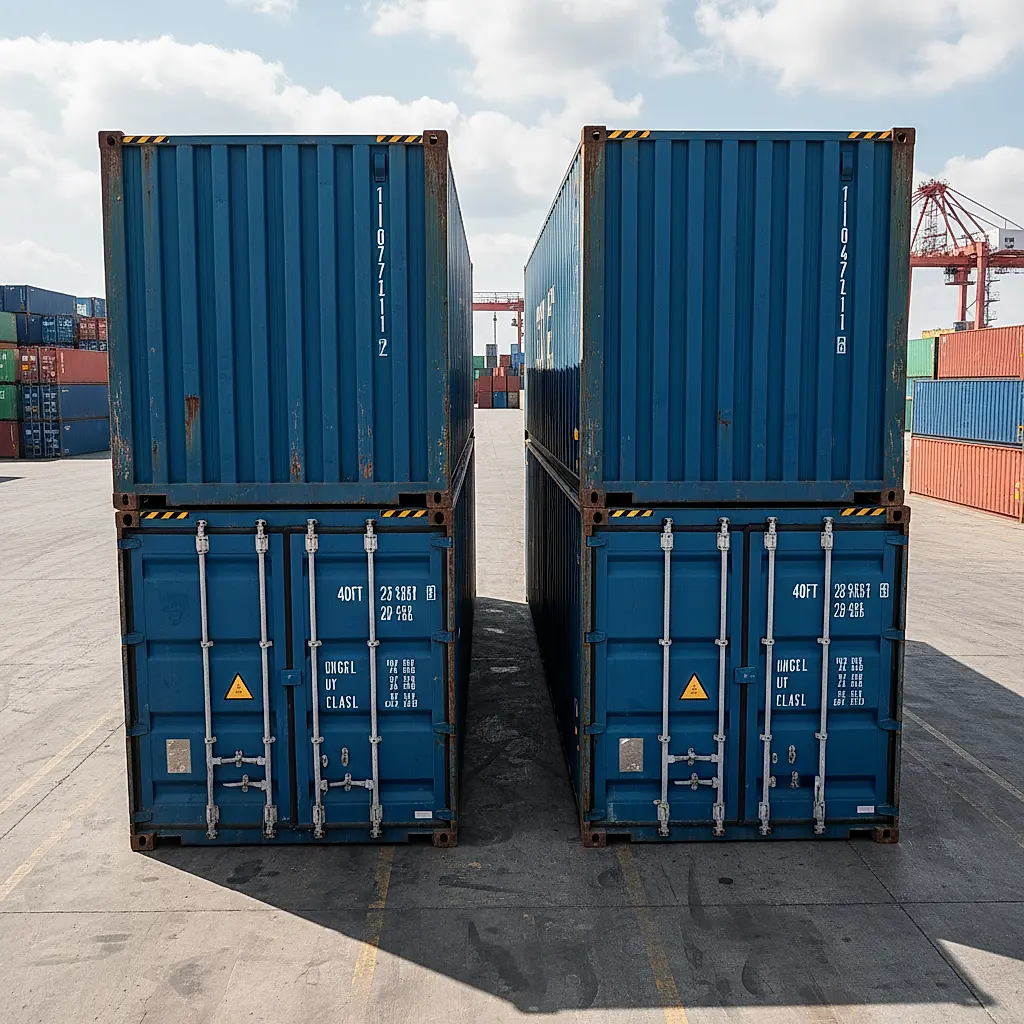
Compare 40ft high cube and standard container dimensions, including exterior height, interior height, and how that extra foot affects insulation, doors, and site planning. Confirm exact specs with Newport before you buy.
Choosing between a 40ft high cube and a standard 40ft container usually comes down to one question: do you need the extra interior height, and can your project handle the extra exterior height? The difference sounds small on paper, but it changes insulation plans, door openings, shelving, and how the container sits on your site.
This guide explains the nominal differences, where uncertainty creeps in, and what to verify before you order. Always confirm exact dimensions, condition, and availability for the specific listing with the Newport team.
The core difference: one foot of height
Shipping containers are built to nominal dimensions, but the actual numbers vary by manufacturer, age, and condition. The widely cited nominal figures below are a starting point, not a guarantee for any single unit.
Standard 40ft container (nominal)
- Exterior length: about 40 feet
- Exterior width: about 8 feet
- Exterior height: about 8 feet 6 inches
- Interior height: roughly 7 feet 10 inches, depending on floor and roof build
40ft high cube container (nominal)
- Exterior length: about 40 feet
- Exterior width: about 8 feet
- Exterior height: about 9 feet 6 inches
- Interior height: roughly 8 feet 10 inches, depending on floor and roof build
The headline: a high cube adds approximately one foot of height compared with a standard container of the same length. Length and width are generally the same. That single foot is the entire decision.
Why "nominal" matters
Nominal dimensions are round numbers used for planning. Real containers can differ because of:
- Floor thickness and undercoating
- Roof corrugation and any repairs
- Door hardware and gaskets
- Modifications made by a previous owner
- Wear, dents, or resurfacing
If a project depends on a precise measurement, ask for the actual dimensions of the unit you are considering and check the CSC plate and listing details. Do not assume every 40ft high cube is identical.
How the extra height changes interior planning
That additional foot is not just headroom. It affects how you use the space from floor to ceiling.
Insulation and interior finishes
If you plan to insulate and line the container, you lose interior space to framing and insulation thickness. A high cube gives you more room to work with before the ceiling feels low.
- Spray foam, rigid board, and framed walls all reduce interior height.
- A standard container may feel tight after ceiling insulation and a finished floor.
- A high cube can absorb insulation thickness while keeping usable headroom.
Exact finished dimensions depend on your build method, so plan with your contractor rather than assuming a fixed result.
Shelving, racks, and overhead storage
High cubes are often chosen when vertical storage matters:
- Taller shelving units and pallet racks
- Overhead lofts or mezzanines
- Hanging storage for tools, parts, or equipment
- Vertical clearance for tall items that will not fit a standard unit
Measure your tallest item, add clearance for loading and ventilation, and compare that number to the interior height of the specific container.
Doors, windows, and openings
Cutting openings changes the structure and the dimensions you are working with. A high cube gives more wall area above and below an opening, which can matter for framing doors and windows. Any modification should follow local requirements and sound structural practice. Confirm what is allowed in your area before cutting.
Exterior height: the part that trips up site plans
The extra foot is outside the container too. That affects transport, placement, and how the container relates to its surroundings.
Transport and delivery considerations
A taller container sits higher on a trailer and can interact differently with overhead obstacles along the route. Trees, wires, bridges, and site entrances are all worth checking.
- Share route details and site access information with the delivery team.
- Ask what equipment and access the delivery requires for your specific site.
- Confirm overhead clearance and turning room before delivery day.
Delivery requirements vary by location, load, and equipment. The Newport team can walk through your site details, but the final responsibility for a safe, accessible delivery point is shared.
Placement and foundation
A high cube raises the roofline. Consider:
- Sightlines from neighbors and how the container fits local rules
- Sun exposure and how a taller wall shades the area
- Blocking, footings, or a pad that keeps the container level
- Drainage around the base
A level, well-drained base protects the container and makes doors operate correctly. Confirm site preparation expectations with the delivery team.
Local rules and permits
Rules about container use, height, setbacks, and appearance vary by jurisdiction. A taller container may or may not matter under local rules, and no one can promise an outcome in advance. Check with your local authority and, if needed, a land-use professional before you buy.
Which one fits your project?
There is no universal right answer. Use these prompts to decide.
Choose a standard 40ft when:
- You want the most common, widely available configuration
- Your route or site has tight overhead clearance
- You do not need extra interior headroom
- You want to keep exterior height closer to typical
Choose a 40ft high cube when:
- You need more interior height for insulation or finishes
- You store tall items or want taller racking
- You plan a workshop, office, or living conversion with a finished ceiling
- Your route and site can accommodate the taller exterior
Confirm before you commit
- Ask for the actual interior and exterior dimensions of the specific unit.
- Review the listing details and CSC plate.
- Confirm condition, doors, and any modifications.
- Discuss delivery access and site requirements.
- Verify local rules with the appropriate authority.
Condition, grade, and what you are actually buying
Two containers with the same nominal size can differ a great deal in condition. Newer units, one-trip units, and used containers are described differently by different sellers, and condition language is not standardized across the industry.
Ask questions such as:
- Is the unit wind and water tight?
- Are the doors and seals in good working order?
- Is there rust, floor damage, or prior repair?
- Has the container been modified or repainted?
- What does the CSC plate show?
Get answers in writing for the specific unit you are considering. Condition affects both usability and how much interior work you will need to do.
Modifications and the height question
Conversions are a common reason buyers choose a high cube. Extra height helps with:
- Ceiling insulation and finished ceilings
- Lofted sleeping or storage areas
- Taller windows and doors
- Mechanical, electrical, and plumbing runs
But modifications raise their own questions. Structural changes, fire safety, ventilation, and code compliance all depend on your local rules and the intended use. Work with qualified professionals and confirm requirements with your local authority. Do not assume a container size determines permit outcomes.
Frequently Asked Questions
Is a 40ft high cube the same length as a standard 40ft container?
Generally, yes. The main difference is height, not length or width. Nominal length and width are typically the same, while a high cube adds roughly one foot of exterior and interior height. Confirm actual dimensions for the specific unit.
How much interior height do I lose when I insulate a container?
The amount depends on your insulation method, framing, and floor build. Rigid board, spray foam, and framed walls each take up different thicknesses. A high cube gives you more starting height to work with, but the finished number is project-specific. Ask your contractor to calculate it.
Does a high cube need different delivery equipment?
Delivery equipment depends on the load, the site, and the route, not just the container height. Share your site access details with the Newport team so they can discuss what your delivery will involve. Do not assume any specific equipment is required.
Will a taller container affect my permits?
Permit and zoning rules vary by location and are set by local authorities. A taller container may or may not matter under your local rules. Check with your local authority before buying or placing a container.
Can I use a standard 40ft container for a workshop or office?
Yes, many people do. The question is whether the finished interior height works for your plans. If you are adding insulation, a ceiling, and a floor, a high cube may give you more comfortable headroom. Compare the finished dimensions you need against the specific container.
Next steps with Newport
Start by deciding whether the extra foot of height solves a real problem for your project, then confirm the details that only the specific unit and your site can answer.
- Browse current listings and review the details for each container: shop containers
- Talk through dimensions, condition, delivery access, and site questions with the team: contact Newport
Before you buy, confirm listing details, availability, pricing, site access, and delivery requirements with the Newport team. For exact specifications, check the individual listing and the CSC plate, and confirm local rules with your local authority.
Plan the next step
Confirm the container and the delivery plan.
Browse current listings, then speak with the Newport team to verify the unit, total pricing, site access, and delivery requirements before payment.