
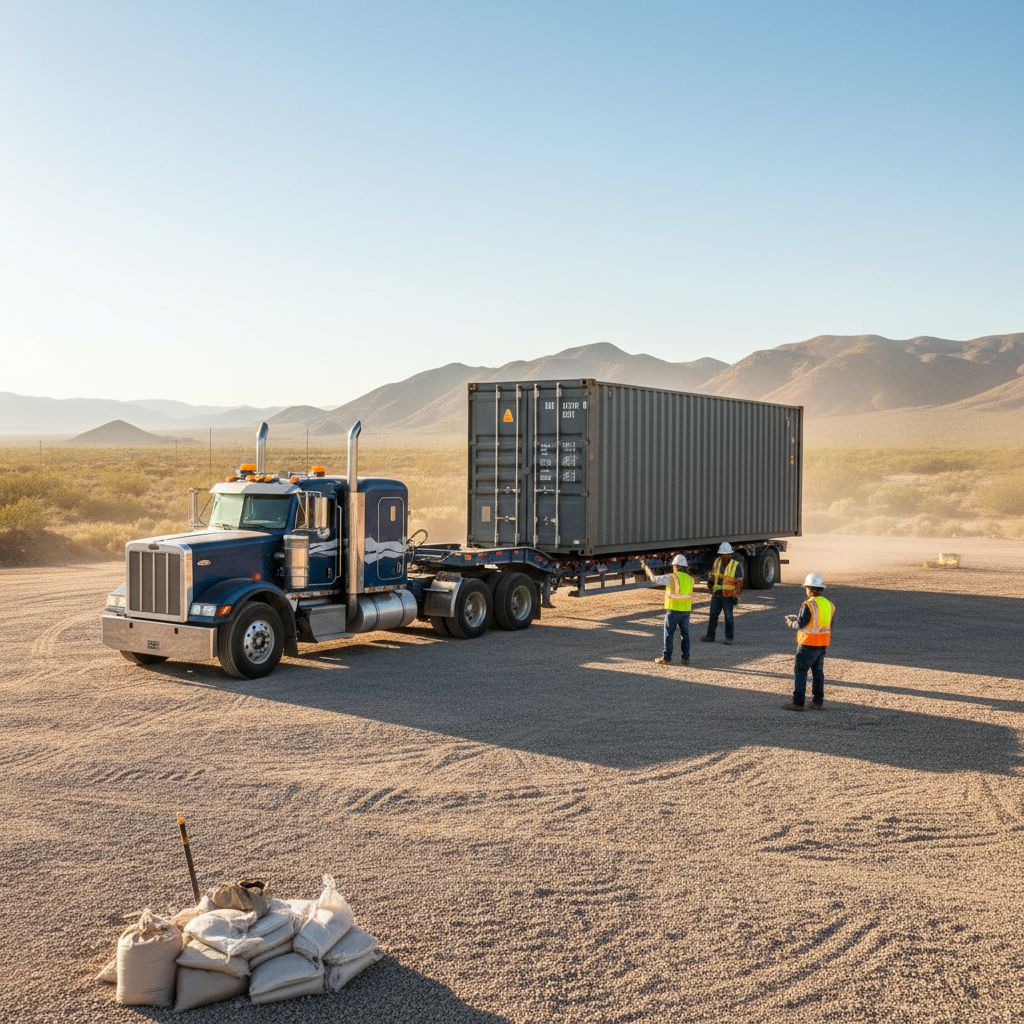
Delivery pricing for shipping containers depends on distance, truck type, and site access—not just a flat per-mile rate. Learn what drives quotes and how to prepare your site.
What Goes Into a Container Delivery Quote
When you request a shipping container delivery, the final price is rarely a simple mileage calculation. Carriers and container suppliers build quotes from several variables: the distance from the depot or yard to your site, the type of truck and trailer required, the time needed to load and unload, any permits or escort requirements, and the difficulty of accessing your property.
Because these factors vary by location and site, no article can give you a universal per-mile rate. The most reliable approach is to share accurate details with the Newport team so they can confirm what applies to your specific delivery. The sections below explain the moving parts so you can ask better questions and avoid surprises.
Mileage and Distance: The Starting Point, Not the Whole Story
How distance is measured
Delivery distance is typically measured from the container yard or depot to your delivery address, often using a routing tool that accounts for truck-legal roads. That number matters, but it is only one input. A short trip through congested roads or difficult terrain can cost more than a longer highway run.
Why per-mile rates vary
Carriers may quote a flat fee for a local zone, a per-mile rate beyond that zone, or a combination. Rates can also change with fuel prices, seasonal demand, and driver availability. If you see a published per-mile figure online, treat it as a rough planning reference rather than a guaranteed price. Confirm current rates with Newport before you budget.
Questions to ask about distance
- Is the quote based on one-way or round-trip mileage?
- Does the rate include the return trip for the trailer?
- Are there tolls, bridge fees, or ferry costs on the route?
- Is there a minimum charge even for short distances?
Truck and Trailer Type: Tilt-Bed, Flatbed, and More
Why equipment matters
The container has to be moved from the trailer to the ground. Different trailer types support different unloading methods, and the equipment available in your area affects both price and scheduling.
- Tilt-bed trailers can tilt to let the container slide off. They are often used where a crane is not available, but they require enough space and a suitable surface.
- Flatbed trailers typically need a crane or forklift to lift the container off. This can be practical when you already have lifting equipment on site.
- Roll-off or specialized trailers may be used for certain container sizes or site conditions.
Matching equipment to your site
The right choice depends on what the delivery company can access, what equipment you have, and how much room you have for the truck to maneuver. A tilt-bed may not be suitable on soft ground or a steep slope. A crane-assisted flatbed delivery may cost more but can place the container more precisely.
Ask Newport which methods are available for your area and container size, and describe your site honestly. Photos or a quick video of the approach can help the team recommend the safest option.
Site Access: The Factor Buyers Underestimate Most
Clearance and turning radius
A delivery truck needs a clear path from the road to the drop point. Overhead wires, tree branches, low bridges, and narrow gates can block access. The driver also needs room to turn and, in some cases, to back in. If the truck cannot reach the drop point, the container may be left at the curb or the delivery may need to be rescheduled.
Ground conditions
Soft soil, mud, gravel, or a steep grade can prevent a loaded truck from safely positioning the container. A firm, level surface is generally best. If your site is unpaved or uneven, discuss it with the delivery team in advance so they can plan accordingly.
Space to unload
Unloading a container requires space around the trailer. A tilt-bed needs room for the container to slide off and for the truck to pull forward. A crane needs a stable setup area and swing radius. Measure your available space and share those dimensions with Newport.
Practical preparation checklist
- Walk the route from the main road to the drop point and note any obstacles.
- Trim branches or move items that could block a tall truck.
- Identify overhead lines and measure clearance if possible.
- Confirm the ground is firm and level at the drop point.
- Mark any underground utilities, septic lines, or irrigation before delivery.
- Have a contact person on site to guide the driver.
Permits, Escorts, and Local Rules
Some deliveries require permits or escorts, especially if the route includes weight-restricted roads, oversize loads, or local restrictions. Requirements vary by state, county, and city, and they can change. Do not assume a particular container size automatically avoids permits—confirm with the delivery company and your local authority.
The Newport team can tell you what they typically handle and what you may need to arrange. If a permit is required, it can affect both cost and scheduling, so raise the question early.
Container Size and Delivery Logistics
Nominal dimensions and why they matter
Shipping containers are commonly described by nominal length: 20-foot and 40-foot are the most familiar. Width is generally about 8 feet, and heights are often described as standard or high-cube. These nominal figures help you plan, but exact external and internal dimensions can vary by manufacturer and container type. Always check the individual listing and the CSC plate on the container for precise specifications.
How size affects delivery
A longer container may require different trailer equipment and more space to maneuver. It can also affect routing if turns are tight. The delivery team will consider the container size along with your site access when recommending a method.
What to confirm before booking
- The exact container size and type you are buying.
- The delivery address and any access limitations.
- Whether the quoted price includes unloading.
- What equipment will be used and what space it needs.
- Any permits, escorts, or local restrictions that apply.
How to Compare Delivery Quotes Fairly
A low per-mile rate can be misleading if it excludes unloading, tolls, or a return trip. When comparing quotes, ask each provider to itemize the same categories:
- Line-haul or mileage charge
- Fuel surcharge, if any
- Unloading method and equipment fee
- Permits or escort costs
- Tolls and special route fees
- Waiting time or rescheduling fees
- Any site-access surcharge
Then compare the totals, not just the headline rate. Also consider scheduling reliability and the provider's experience with container deliveries in your area. A slightly higher quote from a team that has handled similar sites may save you time and trouble.
Planning Your Budget Without Guessing
Because rates change with distance, equipment, and local conditions, the best way to budget is to request a quote based on your actual address and site details. Share as much information as you can:
- Full delivery address and nearest cross street
- Container size and type
- Site photos showing the approach and drop point
- Any known obstacles or restrictions
- Your preferred delivery window
With those details, Newport can confirm availability, pricing, and any site requirements. If conditions change—such as weather making the ground soft—contact the team before the scheduled delivery to discuss options.
Frequently Asked Questions
How is container delivery priced?
Delivery pricing usually combines distance, truck and trailer type, unloading method, and any permits or access challenges. There is no single per-mile rate that applies everywhere. Confirm the specific factors for your address with the Newport team.
Do I need a crane for delivery?
Not always. Some deliveries use a tilt-bed trailer that does not require a crane, while others use a flatbed with a crane or forklift. The best method depends on your site and the equipment available. Ask Newport what they recommend for your location.
What if my site has limited access?
Tell the delivery team in advance. Narrow gates, low branches, soft ground, and tight turns can affect the delivery method or require a different drop point. Photos and measurements help the team plan a safe approach.
Are permits always required?
No. Permit and escort requirements vary by route and local rules. Some deliveries need them and some do not. Confirm with the delivery company and your local authority rather than assuming based on container size.
Can I change the delivery date after booking?
Scheduling policies vary. Contact Newport as early as possible if your plans change. Weather, site conditions, and carrier availability can all affect rescheduling.
Next Steps
Ready to plan your delivery? Browse available containers and request a quote based on your address and site details. The Newport team can confirm current pricing, availability, and delivery requirements for your location.
Before you finalize, double-check the individual listing for exact specifications and review the CSC plate on the container. If you have questions about site access or unloading, reach out—clear communication up front helps avoid delays and unexpected costs.
Plan the next step
Confirm the container and the delivery plan.
Browse current listings, then speak with the Newport team to verify the unit, total pricing, site access, and delivery requirements before payment.