
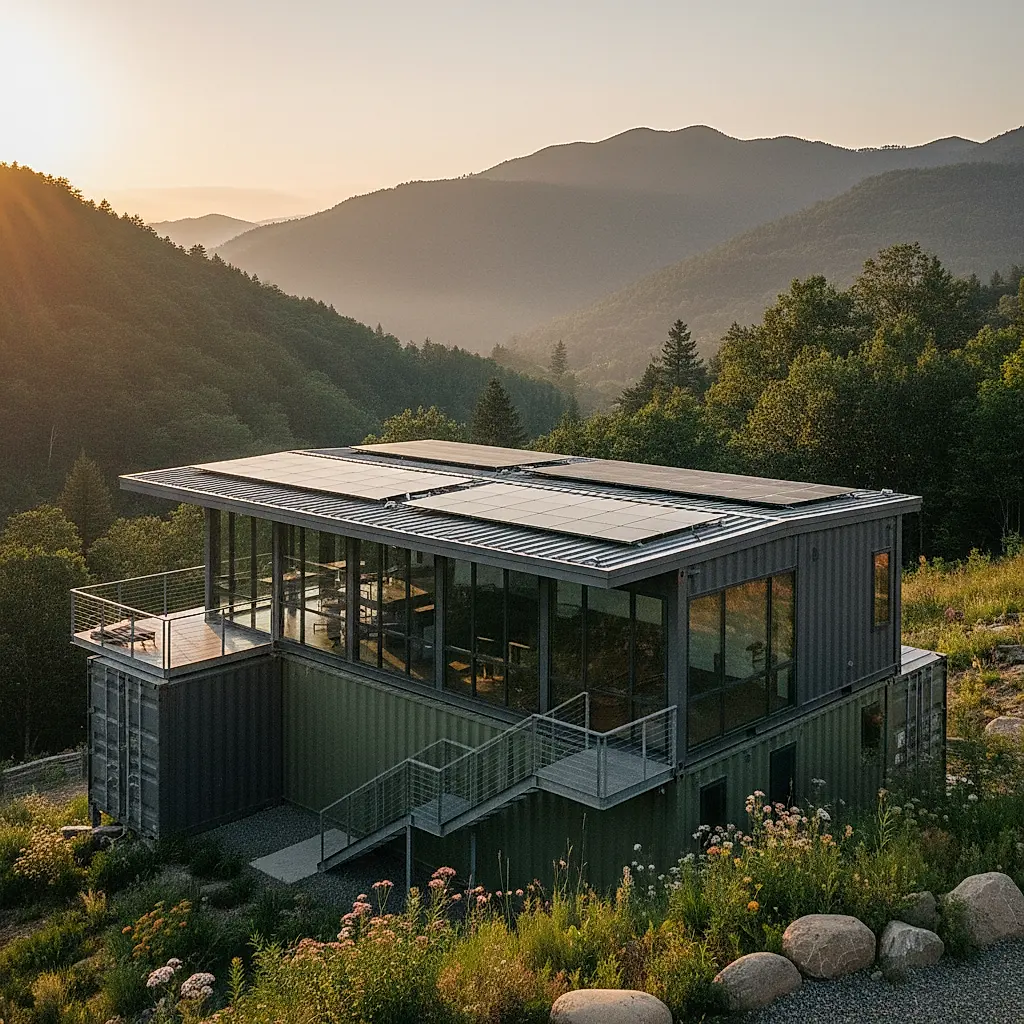
A practical framework for comparing states for a container home project, covering zoning, codes, climate, and site logistics without guesswork.
Building a home from shipping containers can be an efficient and distinctive path, but the legal and practical rules vary enormously from one state to the next. There is no single national rulebook for container homes, and no state is universally "best." What matters is how your specific parcel, county, and project type fit the rules where you want to build. This guide gives you a decision framework you can apply anywhere, plus the questions to ask before you buy a container or a lot.
Start With the Local Jurisdiction, Not the State
It is tempting to search for a state-by-state ranking, but in the United States most land-use authority sits with counties, cities, and townships. A state may set broad building code standards, while the county or city decides zoning, setbacks, permits, and what counts as a dwelling. Two parcels in the same state can have completely different outcomes.
The layers of rules that apply to a container home
- State-level building code adoption. States typically adopt a model code and may amend it. Local officials interpret and enforce it.
- County or city zoning. This controls whether a dwelling is allowed on your parcel, minimum lot size, setbacks, height limits, and sometimes aesthetic standards.
- Subdivision covenants and HOA rules. Private restrictions can be stricter than public law and are often the real obstacle.
- Fire, septic, and utility authority. Health departments and utility providers have their own requirements for wells, septic systems, and power connections.
- Floodplain and coastal rules. If the parcel is in a mapped flood zone or a coastal area, additional requirements may apply.
Because these layers interact, the useful question is not "which state allows container homes?" but "what will my county require for a dwelling on this parcel?"
Why a pre-purchase zoning check saves money
Before you commit to land or a container, contact the local planning or zoning office. Ask whether a dwelling built from shipping containers is treated as a conventional site-built home, a manufactured home, or something else. The classification drives the inspection path, foundation requirements, and sometimes whether the project is allowed at all.
A Practical Framework for Comparing States
Instead of a ranking, use consistent criteria so you can compare candidate locations fairly. Score each location on the factors below, then verify with local officials.
1. Zoning and permitted use
- Is a single-family dwelling a permitted use on the parcel, or does it require a special use permit or variance?
- Does the jurisdiction have any written guidance on container structures?
- Are there minimum square footage rules that affect your design?
2. Building code pathway and inspections
- Which code edition has the local authority adopted?
- How will the container's structural shell be evaluated, and what engineering documentation will be requested?
- What inspections are required at foundation, framing, electrical, plumbing, and final stages?
3. Climate and site conditions
- What are the typical temperature swings, humidity levels, and rainfall patterns?
- Is the parcel in a flood zone, high-wind area, or wildfire-prone zone?
- How will soil conditions affect foundation design?
4. Utilities and services
- Is grid power available, or would you rely on off-grid systems?
- What is required for water and wastewater?
- Are there local fees or impact charges tied to new dwellings?
5. Access and logistics
- Can a delivery truck reach the build site, and where can it safely stop and unload?
- Is there room to maneuver and set the container down?
- Are there seasonal restrictions such as weight limits on roads?
6. Cost of compliance, not just cost of land
A cheaper parcel can require more engineering, longer utility runs, or more expensive foundation work. Compare total project risk rather than sticker price alone.
Common Approaches and Their Trade-Offs
Container home projects tend to fall into a few patterns. Each has different regulatory implications.
Primary residence
A full-time home usually faces the strictest review because it must satisfy the complete residential code, including energy, egress, and life-safety requirements. Expect a full permit process and multiple inspections.
Accessory dwelling unit or guest structure
Some jurisdictions are more open to secondary structures, but rules vary widely. An accessory unit may still require permits, and some places limit occupancy or size.
Workshop, studio, or storage
Non-habitable structures often face a lighter review, but this depends on local definitions. If you later want to convert a structure to living space, you may need a new permit.
Off-grid or rural use
Rural parcels can offer more flexibility on some issues and more complexity on others, such as access roads, wells, and septic approvals. Do not assume rural means unregulated.
Questions to Ask Before You Buy Land or a Container
Bring this list to your planning department, health department, and utility providers. Write down names and dates so you have a record of what you were told.
- Is a container-based dwelling allowed on this parcel as a permitted use?
- If not, what approval process applies, and what is the typical timeline?
- What engineering or stamped drawings will be required for the container shell?
- What foundation types are accepted in this jurisdiction?
- Are there design, color, or screening requirements?
- What are the water and wastewater options for this parcel?
- Are there floodplain, wetland, or slope restrictions?
- What fees apply to a new dwelling?
- Does the fire authority have access or water-supply requirements?
If any answer is uncertain, treat that as a risk to resolve before purchase rather than a detail to handle later.
Container Condition, Documentation, and Specifications
Once the location question is clearer, the container itself becomes the next decision point. Containers are built to international standards, and used units carry a CSC plate that records key ratings. Those markings are a starting point, not a substitute for inspection.
What to review on a container listing or CSC plate
- The plate shows ratings and identification data. Confirm the specific figures on the unit you are considering rather than relying on general assumptions.
- Nominal external dimensions for common containers are often described in approximate terms: a 20-foot container is roughly 20 feet long and about 8 feet wide, while a 40-foot container is roughly 40 feet long and about 8 feet wide. Standard height and high-cube height differ, so confirm the exact height on the listing.
- Interior dimensions are reduced by wall thickness, and usable space is further affected by any lining, insulation, or framing you add.
Inspection points for a used container
- Surface rust, especially along the roof and floor seams
- Floor condition, including soft spots or delamination
- Door operation, gaskets, and locking hardware
- Dents, repairs, or patches that could affect structural planning
- Signs of moisture or odor inside
Because condition varies unit by unit, ask the seller for current photos and specific details, and confirm what you are buying before delivery. For exact specifications and availability, check the individual listing and speak with our team.
Design and Build Considerations That Affect Approval
How you plan to finish the container often determines how smoothly it moves through review.
Insulation and thermal performance
Steel conducts heat readily, so insulation strategy matters in both hot and cold climates. Local energy code requirements may influence your wall, roof, and floor assemblies. Discuss your climate and intended use with a qualified designer or builder.
Structural modifications
Cutting openings for doors and windows changes how loads travel through the container. A structural engineer familiar with container construction should review any significant cuts, and some jurisdictions will require stamped drawings.
Moisture control
Condensation and water intrusion are common concerns in steel structures. Detailing for ventilation, drainage, and vapor control belongs in your plans from the start.
Foundation and anchoring
Foundation type depends on soil, frost depth, and local code. Anchoring requirements also vary by wind and seismic risk. Your engineer and local building official are the right sources for your parcel.
Frequently Asked Questions
Are shipping container homes legal in all states?
No blanket answer applies. Legality depends on local zoning and building codes, which are usually administered by counties and cities rather than states. A container home may be allowed in one jurisdiction and restricted in a neighboring one. Always confirm with the local planning department for the specific parcel.
Which state is best for a container home?
There is no universally best state. The right choice depends on your parcel's zoning, the code pathway, climate, utility availability, and site access. A location that works well for one project may be a poor fit for another, so evaluate each candidate site on its own facts.
Do I need a special permit for a container home?
Requirements vary by jurisdiction, and it is not accurate to assume one project type needs fewer approvals than another. Some places treat container dwellings like conventional homes, while others require additional review. Ask your local building and zoning office what applies to your parcel and design.
Can I use a container for a workshop instead of a home?
Often that path involves a different level of review, but local definitions control. A structure classified as non-habitable may face fewer requirements than a residence, yet converting it later to living space typically triggers new permits. Confirm the rules before you build.
What should I verify before ordering a container?
Confirm the exact dimensions, condition, and documentation for the specific unit, and verify that delivery can reach your site. Ask about access, unloading space, and any scheduling constraints. Our team can walk you through listing details and delivery requirements for your location.
Next Steps for Your Project
Work in this order to reduce surprises: verify zoning and the code pathway for your parcel, confirm utility and access feasibility, then select a container that fits your design and site. Keep a written record of every conversation with local officials, and revisit assumptions if your plans change.
When you are ready to look at units, browse current availability at our shop and review the details on each listing. If you have questions about specifications, condition, or delivery planning, contact the Newport team and we will help you confirm the details that matter for your project. Final decisions on zoning, engineering, and permits rest with you and your local authority, so verify everything for your specific site before you commit.
Plan the next step
Confirm the container and the delivery plan.
Browse current listings, then speak with the Newport team to verify the unit, total pricing, site access, and delivery requirements before payment.