
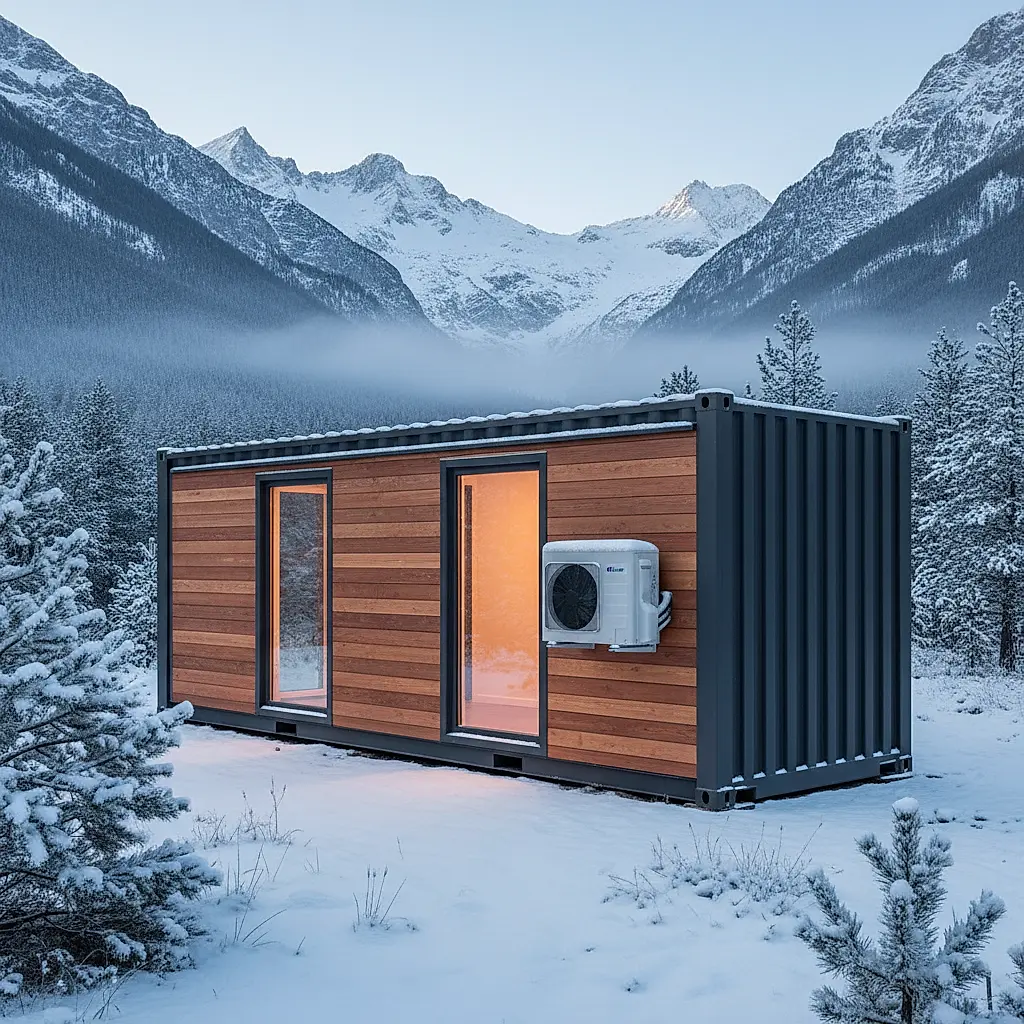
Learn how to insulate a shipping container office for winter, including insulation options, thermal breaks, condensation control, and ventilation strategies.
Why Insulating a Shipping Container Office for Winter Is Different
A shipping container office offers a durable, secure, and portable workspace, but its steel construction creates specific challenges when temperatures drop. Steel is an excellent conductor of heat, which means a container can lose warmth rapidly in winter and become uncomfortably cold without proper insulation. Understanding how heat moves through the container envelope is the first step toward a comfortable, efficient office.
The goal of winter insulation is not just to add a layer of material. You are managing three things at once: heat loss through conduction, air leakage through gaps and seams, and moisture movement that can lead to condensation. Addressing only one of these can leave you with a space that is still cold, damp, or both.
This guide explains the decisions you will face, the trade-offs between common insulation approaches, and the questions to ask before you buy materials or begin work. Because every project, climate, and container differs, use this as a planning framework and confirm specifics with qualified professionals and your supplier.
How Heat Escapes a Container Office
Conduction Through Steel
Steel framing and wall panels conduct heat far more readily than wood or concrete. In winter, warmth from inside the office moves toward the colder exterior through every point where the interior connects to the steel shell. This is why simply installing insulation batts between furring strips may not perform as well as expected if the fasteners and framing create direct thermal bridges.
Air Leakage
Containers are not airtight by default. Door gaskets, corner castings, vent openings, and any modifications for windows, wiring, or plumbing can allow cold air to enter. Air leakage can account for a significant share of heat loss, and it often undermines insulation that is otherwise correctly installed.
Condensation and Moisture
When warm, moist interior air meets a cold steel surface, condensation can form. Over time, trapped moisture can corrode steel, degrade insulation, and support mold growth. Winter insulation strategies must therefore consider vapor control and ventilation, not just thermal resistance.
Insulation Options and Their Trade-Offs
Rigid Foam Board
Rigid foam boards are popular for container conversions because they are lightweight, available in several thicknesses, and can be cut to fit between framing members. They provide a continuous layer that can help reduce thermal bridging when installed correctly. The main decision points are thickness, material type, and how seams and edges are sealed.
Spray Polyurethane Foam
Spray foam expands to fill gaps and can create a seamless air barrier. Closed-cell foams generally offer higher R-value per inch and can act as a vapor retarder, while open-cell foams are more vapor-permeable. Spray foam requires professional application in most cases, and it can be difficult to remove or modify later. Confirm product suitability and application requirements with a qualified installer.
Mineral Wool and Fiberglass Batts
Batts are familiar and relatively easy to handle, but they must be installed without gaps or compression to perform as rated. In a container, batts alone may not address thermal bridging or air leakage unless paired with a continuous rigid layer or a carefully sealed air barrier.
Reflective and Radiant Barriers
Reflective materials can help manage radiant heat transfer, but they are not a substitute for insulation that resists conduction. Their performance depends on correct installation, clean surfaces, and an air space. Treat them as part of a system rather than a standalone solution.
Thermal Breaks and Framing Details
What a Thermal Break Does
A thermal break is a layer of low-conductivity material placed between the interior finish and the steel structure. It interrupts the path that heat would otherwise follow through the steel. Without a thermal break, interior framing and fasteners can become cold spots where condensation forms and heat escapes.
Common Approaches
- Use rigid insulation as a continuous layer over the steel before adding interior framing.
- Choose framing materials with lower conductivity, or isolate metal framing from the shell with a separation layer.
- Seal fastener penetrations and avoid compressing insulation at structural connections.
- Consider the floor and ceiling separately; they have different exposure and traffic requirements.
Where to Focus First
If your budget or schedule is limited, prioritize the areas with the greatest temperature difference and the most air leakage. That often means the ceiling, the door, and any openings you have added. A thermal camera or a professional energy assessment can help you identify the worst offenders before you invest in materials.
Managing Condensation and Ventilation
Control the Source of Moisture
Everyday activities in an office can add moisture to the air. Cooking, breathing, and damp clothing all contribute. Reducing indoor moisture sources where possible makes condensation easier to manage.
Ventilation Strategies
- Provide controlled ventilation so moist air can escape rather than condense on cold surfaces.
- Consider a heat recovery ventilator for balanced ventilation with reduced heat loss, and confirm sizing with an HVAC professional.
- Keep existing container vents clear and functional unless a qualified designer specifies otherwise.
- Avoid blocking airflow behind insulation layers, which can trap moisture.
Vapor Retarders and Permeability
Vapor control is climate-dependent. In cold climates, the vapor retarder is often placed toward the interior, but the correct assembly depends on your climate zone, insulation type, and building science details. Getting this wrong can trap moisture inside the wall. Confirm the assembly with a qualified professional rather than relying on general rules of thumb.
Planning for Doors, Windows, and Floors
Doors
Container doors are heavy and metal. Adding a vestibule, weatherstripping, and a well-fitted interior door can reduce drafts. Confirm that any door modifications preserve the structure and do not compromise security or weather resistance.
Windows
Windows are a major source of heat loss. Double or triple glazing, insulated frames, and careful flashing details all matter. Each opening you cut into the container should be planned with structural reinforcement and sealing in mind.
Floors
Steel floors conduct heat and feel cold underfoot. Insulating the floor may require a raised subfloor, which affects headroom and door thresholds. Weigh the comfort benefit against the loss of height and the complexity of the build-up.
Choosing the Right Approach for Your Project
There is no single best insulation system for every container office. Your decision will depend on climate, budget, intended use, how often the office is occupied, and whether the container will be moved. A part-time workspace in a mild climate has different needs than a full-time office in a region with severe winters.
Before you commit, clarify these points:
- What interior temperature do you need to maintain, and for how many hours per day?
- Will the office be heated continuously or intermittently?
- Is the container stationary or will it be relocated?
- How much interior height can you afford to lose?
- What is your plan for ventilation and moisture control?
- Who will verify the assembly details and local code requirements?
Because requirements vary by jurisdiction, confirm any permit, code, or inspection questions with your local authority. For container-specific details, such as the condition of the shell and any existing modifications, review the individual listing and the CSC plate, and speak with the Newport team.
Frequently Asked Questions
What is the best insulation for a shipping container office in winter?
There is no universal best choice. Rigid foam, spray foam, and batt systems each have trade-offs in cost, installation difficulty, moisture behavior, and thermal performance. The right option depends on your climate, budget, and how the office will be used. A qualified insulation professional can help you compare options for your specific project.
Do I need a vapor barrier in a container office?
Vapor control is important, but the correct approach depends on your climate and the full wall assembly. A vapor retarder placed incorrectly can trap moisture and cause problems. Discuss the assembly with a building science professional or qualified contractor before installing any vapor control layer.
Can I insulate a container myself?
Some insulation tasks, such as installing rigid board or batts, can be done by a careful do-it-yourselfer. Spray foam and complex assemblies usually require professional application. If you are unsure about moisture control, thermal breaks, or code requirements, involve a professional early.
Will insulation stop condensation completely?
Insulation alone does not guarantee a condensation-free space. Air sealing, ventilation, and moisture management all work together. Even a well-insulated container can develop condensation if warm, moist air reaches a cold surface.
How do I know if my container is suitable for an office conversion?
Inspect the container for structural damage, corrosion, and prior modifications. Review the CSC plate and the individual listing for details, and ask the Newport team about the condition and history of the unit you are considering. A qualified inspector can assess structural fitness for your intended use.
Next Steps for Your Container Office Project
Start by defining how you will use the office and what comfort level you need. Then review available containers and confirm the details that matter for your build. Browse current options at our shop and reach out to the Newport team at our contact page with questions about condition, specifications, site access, and delivery requirements. They can help you confirm listing details and point you toward the information you need before you begin insulating.
As you plan, keep in mind that insulation is one part of a larger system. Air sealing, ventilation, heating, and moisture control all influence how comfortable your container office will be in winter. Taking time to plan the whole assembly will help you avoid costly rework and get more value from your investment.
Plan the next step
Confirm the container and the delivery plan.
Browse current listings, then speak with the Newport team to verify the unit, total pricing, site access, and delivery requirements before payment.