
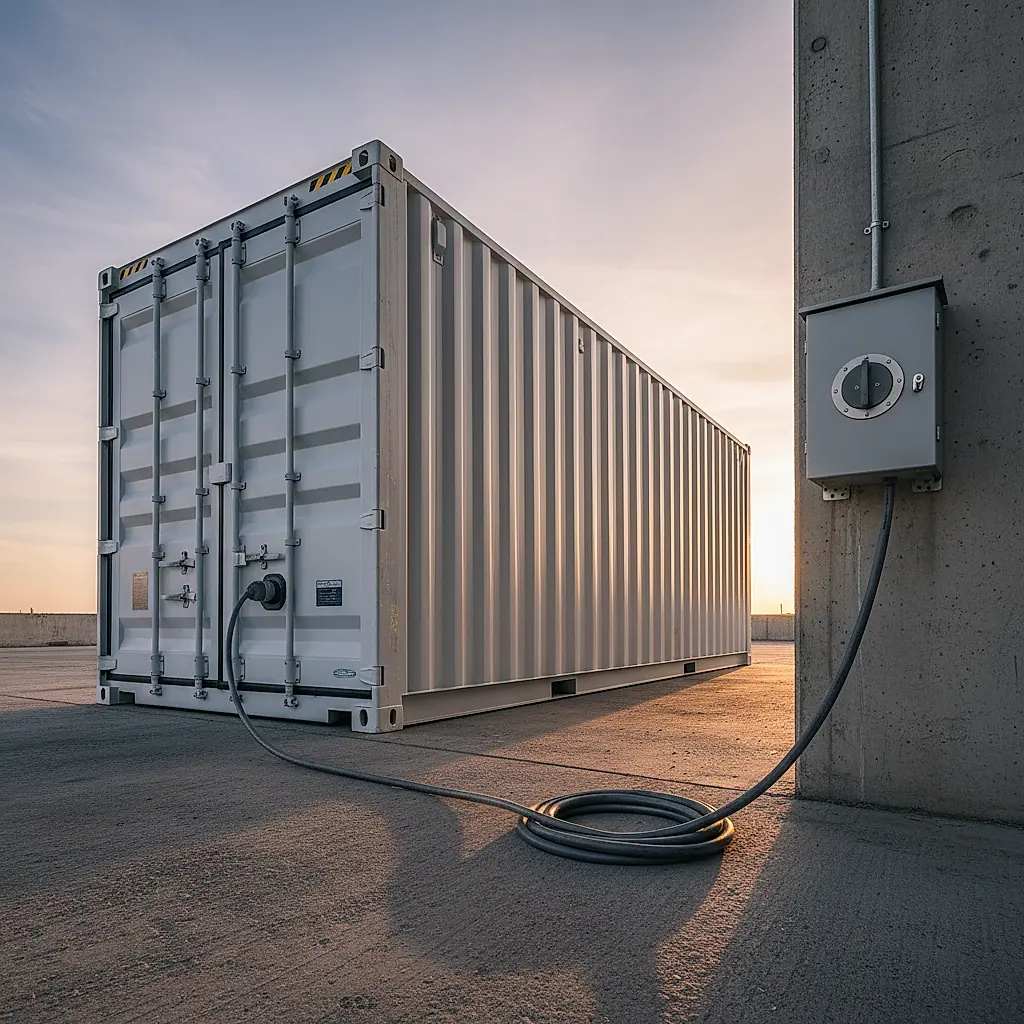
Planning to power a refrigerated shipping container? This guide explains the electrical questions to answer before you buy, from voltage and phase to plugs, protection, and site coordination.
Refrigerated shipping containers — often called reefer containers — are built to hold temperature, not just to store things. That means the electrical side of your project deserves attention before you commit to a unit or a site. The details vary by manufacturer, model, age, and configuration, so treat this article as a framework for asking the right questions rather than a substitute for the actual listing, nameplate, or a licensed electrician.
Why Reefer Power Planning Comes First
A reefer container is a temperature-controlled box with its own refrigeration unit mounted at one end. The unit needs a reliable power source to run the compressor, fans, and controls. If the power supply, plug, cable, or protection device is undersized or mismatched, you can face nuisance trips, equipment damage, or a unit that simply will not start.
Because reefer units are not all the same, the safest approach is to plan around the specific unit you are considering. Two containers that look identical from the outside may have different refrigeration units, different voltage requirements, and different starting characteristics.
Before you buy, gather these basics:
- The refrigeration unit brand and model shown on the listing or nameplate
- The voltage and phase the unit is designed to accept
- The plug or connector type on the unit
- Whether the unit is set up for a single power source or can run on multiple voltages
- Any controller, monitoring, or communications features that affect wiring
If any of that information is missing, ask the Newport team to confirm it for the exact unit before you make decisions about your electrical installation.
Understanding Voltage, Phase, and Frequency
Reefer containers are commonly discussed in terms of voltage, phase, and frequency. The exact values matter, and they are not universal across every unit.
Common power configurations
Many refrigerated containers are designed around three-phase power, while some smaller or specialized units may use single-phase power. Frequency also matters: equipment built for one frequency may not perform correctly on another without the right setup. Rather than assume, verify the nameplate and the listing.
What three-phase power means in practice
Three-phase power is a common way to supply larger motor loads. It is not simply "more power" in a vague sense — it is a different supply configuration with its own wiring, breaker, and receptacle requirements. If your site does not already have three-phase service, that is a significant planning consideration. A licensed electrician can tell you what is feasible at your location and what upgrades, if any, would be involved.
Single-phase and adapted setups
Some owners explore single-phase operation or conversion options. These approaches depend on the specific refrigeration unit and are not one-size-fits-all. Do not assume a unit can be converted, and do not assume a conversion is inexpensive or appropriate. Confirm with the manufacturer's documentation or a qualified technician.
Frequency and controls
Electronic controllers and variable-speed components can be sensitive to frequency and voltage quality. If your site has unusual power conditions, mention that to your electrician so they can plan appropriate protection.
Matching the Power Supply to the Unit
Once you know what the unit needs, the next step is matching the supply. This is where a qualified electrician earns their keep.
Questions your electrician will ask
- What is the unit's rated voltage, phase, and frequency?
- What is the available electrical service at the site?
- How far is the container from the power source?
- What is the routing — overhead, underground, or along a structure?
- What environmental conditions apply — rain, heat, dust, or vibration?
- Will the unit run continuously, cycle, or be monitored remotely?
Cable, plug, and receptacle coordination
Reefer units typically connect through a specific plug or connector. The receptacle you install must match that connector, and the cable must be rated for the load and the environment. Adapters and improvised connections are a common source of problems. If the plug on the unit does not match your planned receptacle, the right fix is to plan a proper match, not to force a connection.
Protection and disconnects
A breaker or disconnect near the container can make service and emergency shutoff easier. The exact rating and type depend on the unit and local code. Your electrician should size overcurrent protection to the unit's requirements and the conductor you install.
Starting loads and power quality
Refrigeration compressors can draw a surge when starting. That surge is one reason a circuit that seems adequate on paper may trip in practice. Your electrician can account for starting characteristics, voltage drop over distance, and whether other loads share the circuit.
Site Planning Before the Container Arrives
Electrical planning and site planning are connected. A container that cannot be reached by the delivery equipment, or that sits too far from power, creates avoidable cost.
Placement and access
Think about where the container will sit, how it will be oriented, and how the refrigeration unit will be accessed for service. The unit end needs room for airflow and maintenance. Delivery access is site-specific; confirm the details with the Newport team and your delivery provider rather than assuming a standard approach.
Distance from power
Long cable runs can increase voltage drop and cost. If your preferred container location is far from your electrical service, discuss options with your electrician early. Sometimes a slightly different placement is the simplest solution.
Weather and enclosure
Reefer units are designed for outdoor service, but connections and receptacles still benefit from appropriate weather protection. Local conditions and code requirements should guide the details.
Coordination with other trades
If your project includes a pad, trenching, conduit, or a dedicated panel, coordinate electrical work with site work so you are not digging twice. A short planning conversation can prevent a long, expensive correction.
What to Confirm Before You Buy
Because specifications vary, build a checklist and confirm each item for the exact unit you are considering.
- Unit identification: brand, model, and serial information from the listing or nameplate
- Electrical ratings: voltage, phase, and frequency as stated on the unit
- Connector type: the plug or connection interface on the unit
- Controller features: any monitoring, alarm, or communications options
- Condition and service history: what is known about the refrigeration unit's condition
- Documentation: manuals, diagrams, or labels that came with the unit
- Site readiness: service capacity, distance, and routing at your location
- Local requirements: permits, inspections, and code applicable to your project
If a listing does not show a detail you need, ask. It is better to pause and confirm than to plan around an assumption.
Working With a Licensed Electrician
Electrical work on a reefer container installation is not a casual DIY project. A licensed electrician can evaluate your service, calculate load and voltage drop, select conductors and protection, and confirm that the installation meets applicable code. They can also advise on grounding, bonding, and disconnects.
Bring these items to the conversation:
- The unit's nameplate information or photos
- The manufacturer's documentation, if available
- Your site's electrical service details
- Your intended placement and distance from power
- Any monitoring or control requirements you have in mind
Ask your electrician to explain the plan in plain language and to note any assumptions. If something is uncertain, resolve it before installation.
Frequently Asked Questions
Can I run a reefer container on ordinary household power?
It depends entirely on the refrigeration unit. Some units are designed for power configurations that are not typical of a standard household circuit, and starting loads can be significant. Do not assume a household outlet is suitable. Check the unit's nameplate and consult a licensed electrician about your specific service.
Do all reefer containers use the same plug and voltage?
No. Refrigeration units vary by manufacturer, model, and configuration. Voltage, phase, frequency, and connector type can differ. Always confirm the exact requirements for the unit you are considering rather than relying on general assumptions.
Can a reefer container be converted to a different power type?
Conversion may be possible in some cases, but it is not universal and can involve significant cost and technical work. Whether it makes sense depends on the specific unit and your goals. Discuss it with a qualified technician and confirm what the manufacturer supports.
What should I check before the container is delivered?
Confirm the unit's electrical requirements, your site's power availability, the planned placement and access, and any local requirements that apply. Delivery access and site conditions are specific to your property, so confirm those details with the Newport team before scheduling.
Does a refrigerated container need a dedicated circuit?
That is a decision for your electrician based on the unit's load, starting characteristics, and your site's service. A dedicated circuit is often part of a sound plan, but the right answer depends on the specifics. Ask your electrician to evaluate your installation.
Next Steps for Your Project
Start by identifying the exact unit you are considering and confirming its electrical information. Then bring that information to a licensed electrician along with your site details. If you are still comparing options, browse current listings at our shop to see what is available, and reach out to the Newport team with questions about a specific unit, its documentation, or delivery planning. We can help you confirm listing details and point you toward the information you need, while your electrician and local authority handle the installation requirements for your site.
Plan the next step
Confirm the container and the delivery plan.
Browse current listings, then speak with the Newport team to verify the unit, total pricing, site access, and delivery requirements before payment.