
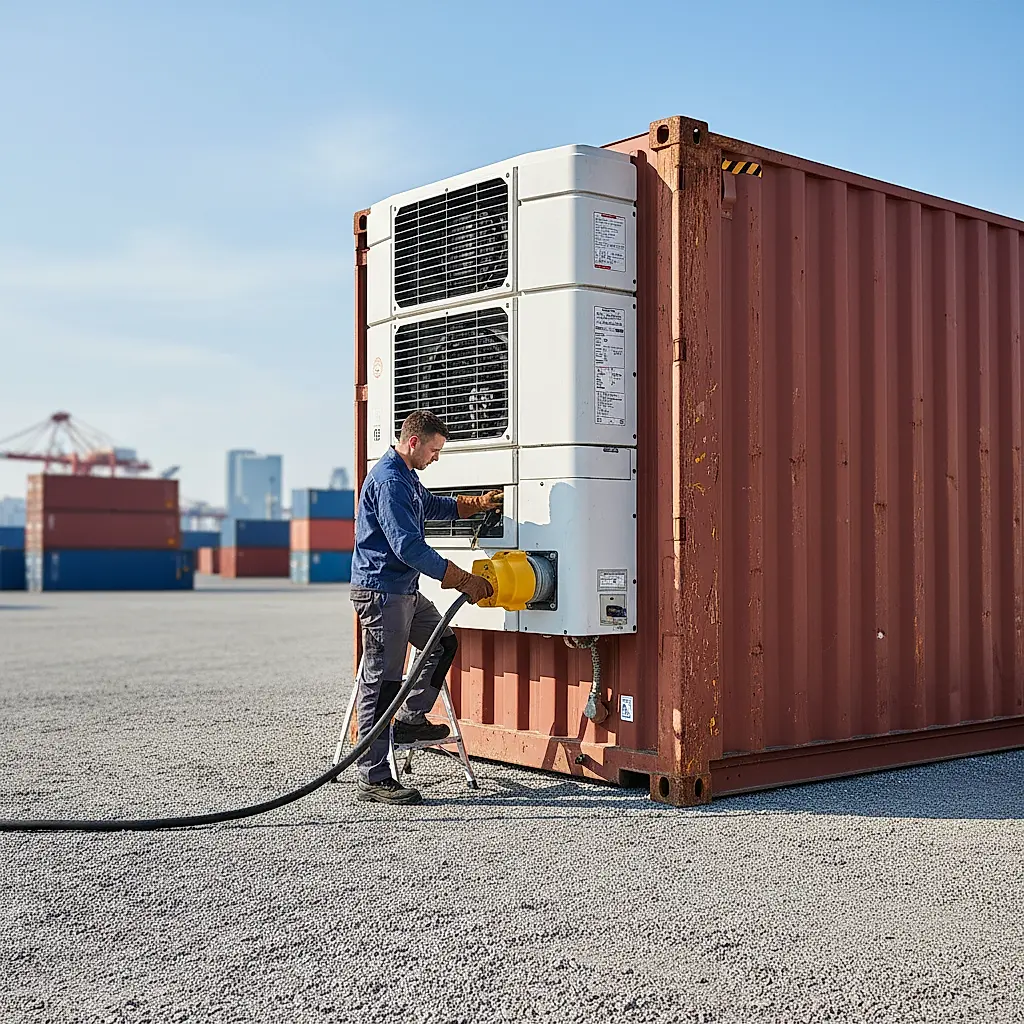
Planning for a refrigerated container? Learn the essential 3-phase power requirements, ISO plug standards, and site preparation steps you need to know.
Refrigerated shipping containers, commonly referred to as "reefers," are highly efficient, portable cold-storage solutions. They are widely used by businesses to store perishable foods, pharmaceuticals, agricultural products, and temperature-sensitive chemicals. However, unlike standard dry shipping containers, a reefer is an active piece of machinery. It relies on an integrated all-electric refrigeration unit that requires a stable, high-capacity power supply to function correctly.
Failing to plan for a reefer container’s electrical requirements can lead to operational delays, damaged equipment, or spoiled cargo. If you are preparing to add a refrigerated container to your commercial site, this guide covers the critical electrical specifications, plug standards, and site preparation details you must address before your unit arrives.
Because electrical infrastructure varies widely by location and container model, we always recommend consulting with a certified commercial electrician and speaking with the team at Newport Shipping Containers LLC to verify listing details, current inventory availability, pricing, site access, and delivery requirements for your specific project.
Understanding Reefer Power Requirements (Voltage and Phase)
The refrigeration units installed on shipping containers are designed for industrial marine environments, where high-voltage, three-phase power is the standard. Operating these units on standard residential or light commercial electrical systems requires careful planning.
Three-Phase Power vs. Single-Phase Power
Standard household appliances in the United States operate on single-phase power (typically 120V or 240V). Reefers, however, require three-phase (3-phase) power. Three-phase electrical systems deliver power through three active conductors, providing a continuous, stable flow of electricity that is highly efficient for driving large electric motors, such as the heavy-duty compressors used in refrigeration units.
Attempting to run a standard reefer on single-phase power is generally not possible without specialized phase-conversion equipment. Even then, phase converters can be inefficient, expensive, and may void equipment warranties or cause premature motor failure. If your facility does not currently have 3-phase service, you will need to discuss utility upgrades with your local electricity provider or consider alternative power generation methods.
Common Voltage Configurations (460V vs. 230V)
Most modern refrigerated containers are designed to operate on one of two primary voltage configurations:
- 460-Volt, 3-Phase (60 Hz): This is the international standard for marine shipping and the most common configuration for reefers. Most units are optimized to run on 460V (or 440V in 50 Hz environments) because it minimizes amperage draw and allows for smaller wire sizes over long distances.
- 230-Volt, 3-Phase (60 Hz): Some reefers are equipped with dual-voltage capabilities or internal transformers that allow them to run on 230V 3-phase power. Operating at a lower voltage means the unit will draw roughly double the amperage compared to 460V operation, requiring heavier-gauge wiring and a larger circuit breaker.
When sourcing a container, it is vital to know your site's available voltage. If your site only has 230V 3-phase power but the container you secure is a dedicated 460V unit, you will need to install an external step-up transformer to bridge the gap.
Standard Reefer Plug Types and ISO Specifications
To maintain safety and compatibility across global ports, vessels, and inland terminals, refrigerated containers utilize standardized plug and receptacle configurations defined by international standards.
The Standard 32-Amp CEE Plug
The most common plug type found on a refrigerated container is the 32-Amp, 4-pin plug conforming to IEC 60309 (often referred to as a CEE plug or ISO plug). This plug is specifically designed for high-voltage, weather-resistant industrial applications.
Key features of this plug standard include:
- Pin Configuration: The plug features four pins: three phase pins (L1, L2, L3) and one ground pin (PE). There is no neutral pin, as the container's internal control transformer handles any single-phase control voltage requirements internally.
- IP Rating: These plugs and receptacles are rated IP67, meaning they are dust-tight and highly water-resistant, capable of withstanding heavy rains, washdowns, and marine spray.
- Color Coding: In accordance with industrial standards, plugs and receptacles rated for 380V to 480V are color-coded red, while those rated for 200V to 250V are color-coded blue. This visual system prevents operators from plugging a low-voltage unit into a high-voltage outlet, or vice versa.
Cable Lengths and Durability
Most refrigerated containers come equipped with a heavy-duty, weather-resistant power cable pre-wired directly into the unit’s control box. These cables are typically between 50 and 60 feet in length. Because the cable must withstand extreme weather, UV exposure, and physical wear, it is constructed with thick, oil-resistant synthetic rubber or thermoplastic jacketing.
When planning your site layout, ensure the container’s final placement is close enough to your electrical disconnect box so that the built-in cable can reach without tension or the need for unsafe extension cords.
Generator Sets (Gensets) for Off-Grid Power
There are situations where utility-provided shore power is unavailable or unreliable—such as during transport on a truck chassis, at remote agricultural sites, or during emergency power outages. In these scenarios, a generator set (genset) is required to supply the necessary 3-phase electrical power.
Clip-On vs. Undermount Gensets
Gensets designed for reefers are diesel-powered generators engineered to output clean, stable 460V (or 230V) 3-phase electricity. They generally come in two designs:
- Clip-On Gensets: These units mount directly to the upper front frame of the refrigerated container, right next to the refrigeration machinery. They are ideal for stationary off-grid storage or when the container is moved frequently between different locations.
- Undermount Gensets: These generators are designed to mount directly to the chassis of the transport trailer underneath the container. They are typically used for long-haul trucking where the container remains on the chassis for the duration of its journey.
If you plan to use a genset, factor in the cost of diesel fuel, regular engine maintenance, and local emissions or noise ordinances that may restrict generator use in your area.
Preparing Your Site for Reefer Delivery and Installation
Proper site preparation is essential to ensure a safe, smooth installation and to protect your electrical equipment from damage.
Safety, Grounding, and Circuit Protection
Before your container is delivered, have a licensed commercial electrician install a dedicated electrical disconnect switch near the final resting spot of the container. This disconnect switch must meet several criteria:
- Correctly Rated Circuit Breaker: For a standard 460V 3-phase unit, a dedicated 30-amp circuit breaker is typically required. For a 230V 3-phase unit, a dedicated 50-amp circuit breaker is usually necessary. Your electrician must verify the exact full-load amperage (FLA) listed on the container's data plate.
- Proper Grounding: Ensure the electrical circuit is properly grounded according to local building codes and the National Electrical Code (NEC). Proper grounding protects operators from electrical shock and shields the sensitive microprocessors inside the refrigeration controller from electrical surges.
- Phase Rotation Verification: When your electrician wires the receptacle, they should verify the phase rotation. While modern reefer units (such as those from Carrier or Thermo King) often feature automatic phase-correction technology that adjusts the compressor rotation automatically, older or specialized units may run backward if the phases are reversed, which can cause immediate equipment damage.
Newport Team Verification Checklist
To ensure a seamless experience, we advise all customers to run through this quick checklist with our team at Newport Shipping Containers LLC before finalizing an order:
- Voltage Confirmation: Double-check if the unit you are purchasing is configured for 460V, 230V, or dual-voltage.
- Plug Type: Confirm the exact plug configuration on the unit to ensure your electrician installs the matching receptacle.
- Site Access and Delivery: Verify that there is clear, level ground for the delivery truck and that your electrical hookup is located safely away from high-traffic areas but within reach of the container's power cord.
Frequently Asked Questions
Can I run a refrigerated container on standard residential single-phase power?
No. Standard reefers require 3-phase electrical power (typically 460V or 230V) to run their heavy-duty compressors. Operating them on single-phase residential power is not supported and can damage the equipment. If you only have single-phase power, you will need to install a heavy-duty phase converter or utilize a diesel generator set.
What size circuit breaker do I need for a reefer container?
Circuit breaker requirements depend on the operating voltage of your unit. A standard 460V 3-phase reefer typically requires a dedicated 30-amp breaker. If the unit is configured to run on 230V 3-phase power, it will draw more current and generally requires a dedicated 50-amp breaker. Always check the manufacturer's data plate on the unit for exact specifications.
How long is the power cable on a standard reefer?
Most refrigerated containers are equipped with a built-in, heavy-duty power cable that is approximately 50 to 60 feet (15 to 18 meters) long. It is highly recommended to place your container close enough to the electrical disconnect box so that this cable can plug in directly without the use of extension cords.
Do reefers automatically adjust to different voltages?
Some premium or newer reefer units feature dual-voltage transformers that allow them to operate on either 230V or 460V 3-phase power, but this often requires manual switching or configuration inside the control box. Many units are dedicated to a single voltage. Always verify the voltage configuration with your provider before plugging in the unit.
Ready to Secure Your Temperature-Controlled Storage?
Setting up a refrigerated container requires careful coordination between your business, a qualified electrician, and your container provider. By verifying your site's electrical capacity and preparing your infrastructure ahead of time, you can ensure your reefer operates safely, efficiently, and reliably from day one.
At Newport Shipping Containers LLC, we help businesses find the right storage solutions for their unique needs. Whether you are looking for standard dry containers or specialized units, our team is here to help you navigate the process.
Explore our current inventory of containers by visiting our Shop Page, or reach out to us directly through our Contact Page to discuss your site requirements, current pricing, and delivery options in the Newport, TN area and beyond.
Plan the next step
Confirm the container and the delivery plan.
Browse current listings, then speak with the Newport team to verify the unit, total pricing, site access, and delivery requirements before payment.