
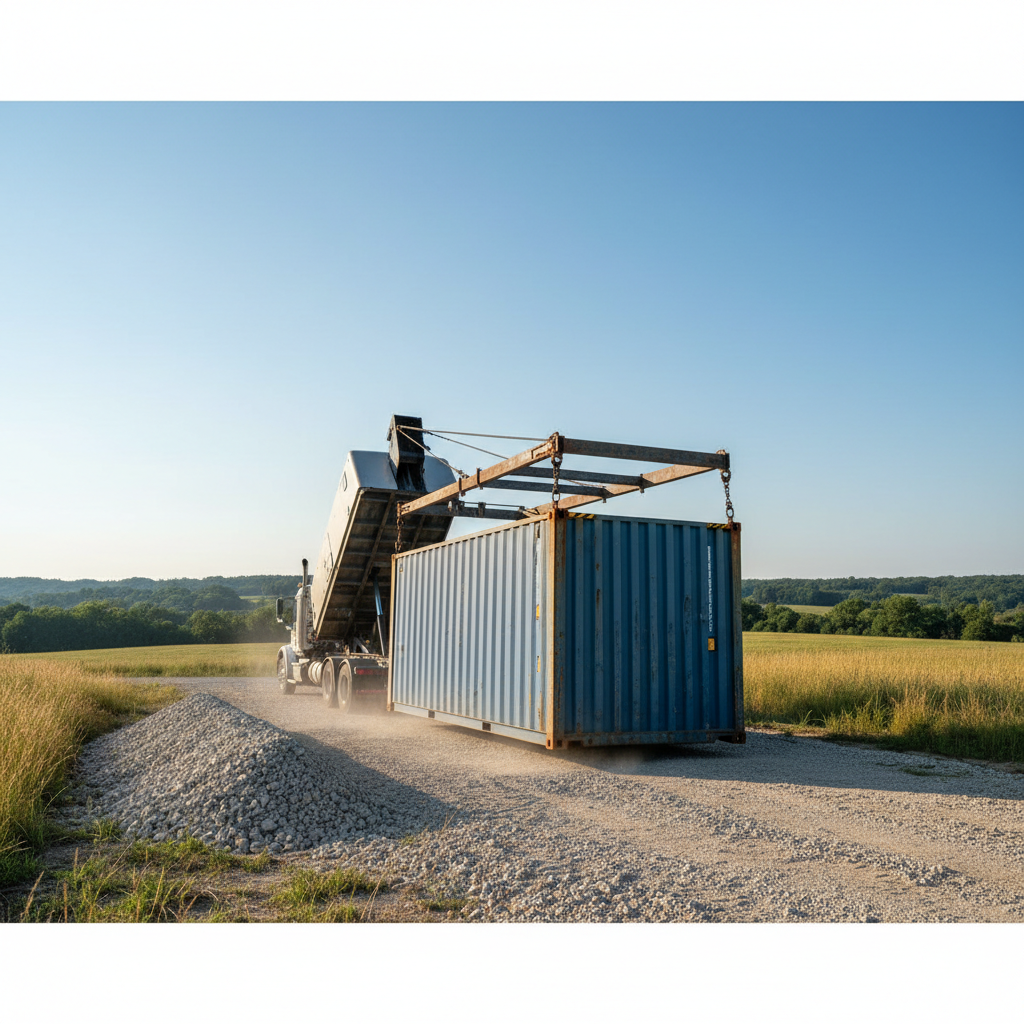
Delivery pricing for shipping containers is rarely a simple per-mile rate. Learn the real cost drivers, how to compare quotes, and how to prepare your site so your delivery goes smoothly.
Why Per-Mile Pricing Is More Complicated Than It Sounds
If you have ever searched for a straightforward "cost per mile" for shipping container delivery, you have probably noticed that most quotes do not break down that way. That is not because sellers are hiding something. It is because container delivery is not a standard parcel shipment. The truck, the equipment, the route, and the site conditions all change the job.
A container is a large, heavy, awkward load. It may need a tilt-bed trailer, a roll-off truck, or a crane, depending on how it is loaded and where it needs to sit. The mileage between the depot and your site is only one input. Access, unloading method, scheduling, and local conditions often matter just as much.
This article explains the factors that typically influence delivery pricing, how to compare quotes fairly, and how to prepare your site so there are fewer surprises on delivery day. Because every listing and every site is different, always confirm the specifics with the Newport team before you order.
The Main Factors That Drive Delivery Pricing
Distance and Route
Distance is the most obvious factor. A delivery across town is usually less expensive than one several hours away. But route matters too. Highways, tolls, bridge restrictions, and urban traffic can all affect how long a driver spends on the road and how much the trip costs to run.
If your site is in a rural area, the last few miles can be the most difficult. Narrow roads, low branches, steep grades, and weight-restricted bridges may require a different route or a smaller truck. These conditions are not always visible on a map, which is why a short conversation about your location is often more useful than a mileage estimate alone.
Truck and Trailer Type
Different delivery methods use different equipment:
- Tilt-bed or roll-off trucks can slide or tilt a container into place and are common for standard deliveries where the ground is firm and the approach is clear.
- Crane-assisted delivery may be needed when the container must be lifted over a fence, placed in a tight spot, or set down where a truck cannot back in.
- Specialized trailers may be required for certain container sizes or weights.
Each method has its own cost structure. A crane, for example, is often billed separately and may have a minimum charge. Confirm with the Newport team which method your site is likely to need.
Site Access and Ground Conditions
The delivery driver needs a safe, stable path to the drop point. Soft ground, steep slopes, tight turns, overhead wires, and parked vehicles can all complicate the job. If the truck cannot reach the spot, the container may have to be left farther away, or the delivery may need to be rescheduled with different equipment.
A few practical questions to ask yourself before delivery:
- Is the ground firm enough to support a loaded truck?
- Is there enough overhead clearance for the truck and any lifting equipment?
- Can the truck turn around, or will it need to back out?
- Are there gates, fences, or low branches in the way?
- Is the drop point on a public road, a private drive, or a construction site?
If any answer is uncertain, mention it when you request a quote. It is far easier to plan for a crane or a different route in advance than to solve it on delivery day.
Scheduling and Availability
Delivery pricing can also reflect timing. Peak seasons, weekends, and short-notice requests may carry different rates because they affect how the driver's day is scheduled. If your timeline is flexible, ask whether there are days or windows that are more economical.
Local Rules and Permits
Some jurisdictions require permits for oversized loads or for placing a container on a public road. Requirements vary widely by location, and they can change. Do not assume that a particular container size avoids permits or that a particular placement is automatically allowed. Check with your local authority, and ask the Newport team what they typically need from customers in your area.
How to Compare Delivery Quotes Fairly
When you gather quotes, look beyond the headline number. A low base rate can become expensive if extras are added later. Ask each provider to clarify:
- What is included in the quoted price?
- Is the mileage measured one way or round trip?
- Are tolls, fuel surcharges, or after-hours fees extra?
- Is unloading equipment included, or billed separately?
- What happens if the truck cannot reach the drop point?
- Is there a fee to reschedule?
A quote that answers these questions clearly is often more valuable than one that is simply the lowest number. For a fair comparison, give every provider the same information about your site, your timeline, and your preferred placement.
Questions to Ask Before You Book
- Which delivery method do you expect to use for my site?
- What access conditions would change that plan?
- Who is responsible for preparing the ground and clearing the path?
- How much notice do you need to schedule delivery?
- What is the process if the container cannot be placed exactly where I want it?
These questions help you understand the decision points rather than guessing. The Newport team can walk you through the details for your specific order.
Preparing Your Site to Avoid Extra Costs
Good preparation is one of the best ways to keep delivery predictable. You cannot control the weather or every road condition, but you can control a lot of the site itself.
Clear the Path
Walk the route a truck will take. Trim low branches, move vehicles and equipment, and open gates wide enough for a large vehicle. If the route crosses a lawn or unpaved area, consider whether the ground will hold up under a heavy load.
Choose a Sensible Drop Point
A flat, firm, well-drained spot is usually easiest to work with. Think about how you will use the container: do you need doors to open freely? Do you need room to work around it? Will you add steps, a ramp, or a shelter later? Placing the container with those needs in mind can save you from moving it again.
Think About Utilities and Obstructions
Overhead power lines, septic systems, irrigation lines, and buried cables can all affect where a container can be placed or how it can be lifted. If you are unsure what is underground, ask before you dig or drive heavy equipment.
Confirm the Details in Writing
Once you and the Newport team agree on a plan, make sure the key details are documented: the container size, the delivery method, the placement location, and any site notes. If something changes, update the plan early.
Understanding Container Size and Specification Basics
Delivery planning often starts with choosing a container. Standard containers are commonly described by nominal length, with widths around 8 feet and heights that vary between standard and high-cube profiles. Exact dimensions, weights, and ratings vary by unit.
Do not rely on general descriptions for a specific purchase. Check the individual listing and the container's CSC plate for the verified specifications of that unit. If you need a particular size for a project, confirm availability and details with the Newport team rather than assuming a size will fit a specific use.
A few practical points:
- Longer containers need more room to maneuver during delivery.
- High-cube containers are taller, which can matter for overhead clearance.
- The condition and configuration of a used container vary, so review the listing carefully.
If you are still deciding between sizes, it helps to think about what you will store or build inside, how often you need access, and how much space you have for the container itself plus working room around it.
Frequently Asked Questions
Is there a standard cost per mile for container delivery?
There is no single standard rate that applies everywhere. Pricing depends on distance, equipment, site access, scheduling, and local conditions. The best approach is to share accurate details about your site and ask for a quote that explains what is included.
Can I get an exact quote before anyone sees my site?
A provider can often give a good estimate from your description, photos, and address. However, conditions on the ground can change the plan. Be prepared for the possibility that the final method or price may be adjusted if the site is different from what was described.
What if the truck cannot reach my preferred spot?
That is a common decision point. The container may be left at the closest safe location, or the delivery may be rescheduled with different equipment. Discuss this possibility in advance so you know your options and any potential costs.
Do I need a permit for delivery?
Permit requirements vary by location and by how the container is placed. Some jurisdictions have rules about oversized loads or containers on public roads. Check with your local authority, and ask the Newport team what information they need from you.
How far in advance should I schedule delivery?
Lead times vary with demand, route, and equipment availability. Earlier scheduling usually gives you more options. Confirm current lead times with the Newport team when you place your order.
Next Steps: Get a Delivery Plan That Fits Your Site
Delivery pricing makes the most sense when it is tied to your actual site and timeline. Start by browsing available units at our shop to see current listings and specifications. Then reach out through our contact page with your address, site details, and any access concerns. The Newport team can help you understand the likely delivery method, what to prepare, and what to confirm before your container arrives.
A little planning up front goes a long way toward a smooth delivery and a container that works well for your project.
Plan the next step
Confirm the container and the delivery plan.
Browse current listings, then speak with the Newport team to verify the unit, total pricing, site access, and delivery requirements before payment.