
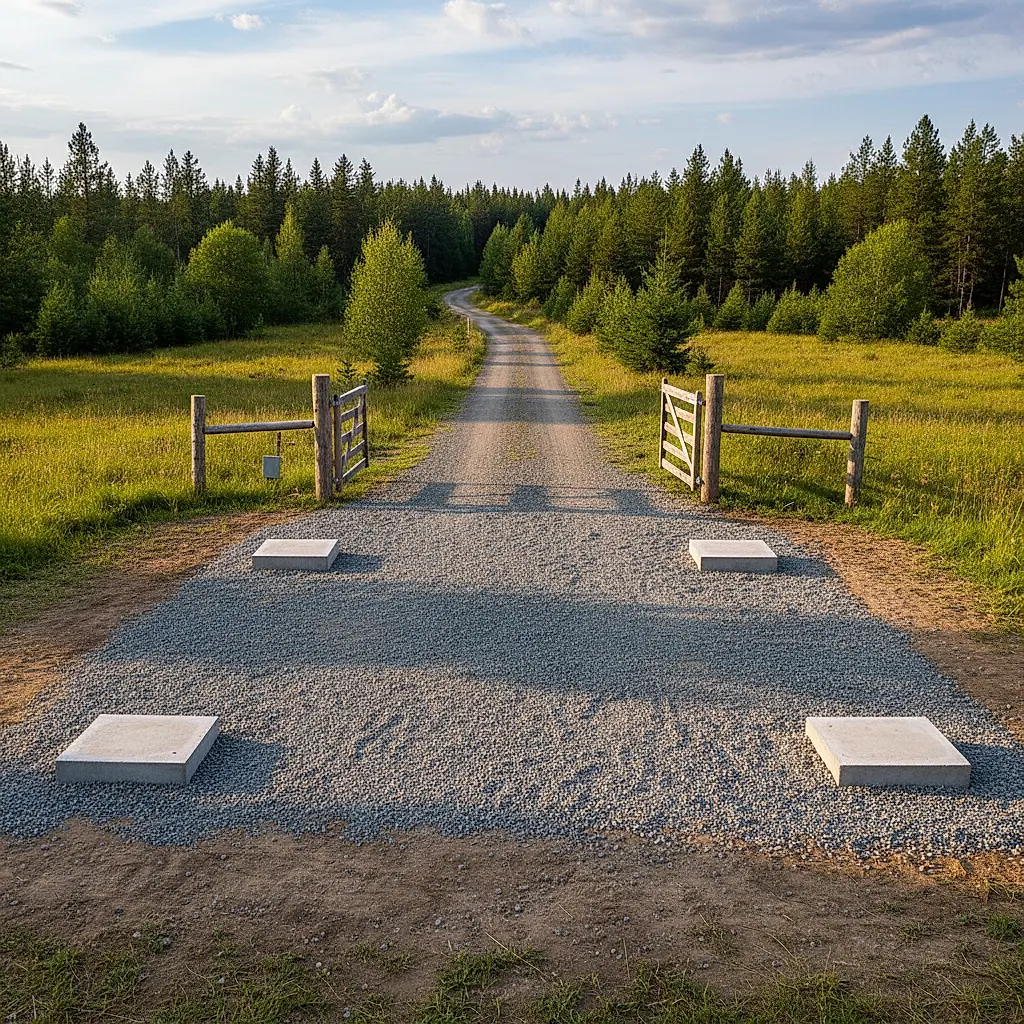
A successful container delivery starts long before the truck arrives. Use this guide to evaluate access, ground conditions, placement, and local requirements so you can plan with confidence.
A shipping container delivery can go smoothly when the site is ready for the truck and the container. The work you do before delivery day—measuring access, preparing the ground, and confirming local requirements—helps avoid delays, damage, and frustration. This guide walks through the practical decisions you will need to make. Because every property and every container listing is different, always confirm exact dimensions, weight, and delivery requirements with the Newport team and your local authorities.
Start with the Delivery Route and Access
The delivery truck needs a clear path from the road to the placement spot. A container is typically 8 feet wide, and common nominal lengths are 20 feet and 40 feet. Height depends on whether the unit is standard height or high cube. Those nominal figures are a starting point only. The actual exterior dimensions, corner castings, and door hardware can affect the space needed, and the delivery truck itself adds length and turning requirements.
Measure the full path, not just the destination
Walk or drive the route the truck will take and note:
- Gate and entry width. Will the truck and its load pass through without scraping? Include mirrors, fencing, and any open doors.
- Overhead obstructions. Look for tree limbs, power lines, wires, signs, and building overhangs. The container rides high on the trailer, so vertical clearance matters.
- Turning radius. Long trailers need room to swing. Tight corners, culverts, and narrow lanes can make a route impossible even if the final spot looks fine.
- Surface strength. Gravel, dirt, and soft turf may not support a loaded truck. Note any recent rain, low spots, or drainage issues.
- Parked vehicles and movable obstacles. Plan to clear the route before the truck arrives.
If any part of the route is uncertain, say so when you contact Newport. The delivery team can discuss what they need and whether a different approach is possible. Do not assume that a standard delivery truck can reach a spot just because a passenger car can.
Consider how the container will be unloaded
Delivery methods vary by location and equipment. In some cases, a tilt-bed or roll-off style truck slides or rolls the container into place. In others, a crane or forklift may be needed. Each method has its own space and ground requirements. Ask Newport what method is planned for your delivery and what clearance or surface that method requires. If a crane is involved, the crane company may have its own access and setup rules that you will need to confirm.
Prepare the Ground and Placement Area
A container is heavy, and it needs a stable, level surface. An uneven or soft base can cause the container to twist, doors to bind, or the structure to settle over time. The right base depends on your soil, climate, intended use, and how long the container will stay.
Common base options
- Compacted gravel or crushed stone. A common choice for temporary and semi-permanent placement. Depth and compaction depend on your soil and load.
- Concrete pad. A poured pad can provide a stable, long-term base. Thickness and reinforcement should be designed for your conditions.
- Railroad ties or timber beams. Sometimes used to spread load and keep the container off the ground. Spacing and sizing matter.
- Existing hard surfaces. Asphalt or concrete may work if they are sound and can handle the load. Check for cracks, soft spots, and drainage.
Whichever option you choose, the goal is a surface that is level, well-drained, and strong enough for the container and its contents. If you are unsure, consult a local contractor or engineer who knows your soil and weather.
Leveling and support points
Containers are designed to rest on their corner castings, but many owners add intermediate support to reduce flexing over long spans. The number and placement of support points depend on the container length, the load inside, and the ground conditions. A 40-foot container may need more support than a 20-foot unit. Do not rely on guesswork. Ask Newport or a qualified professional what is appropriate for your situation.
Drainage and moisture
Water pooling around the base can lead to rust, mold, and settling. Grade the area so water drains away from the container. Keep the base slightly above surrounding ground where possible. In humid climates, ventilation and moisture control inside the container are also worth planning.
Plan for Site Safety and Local Requirements
Before you place a container, check with your local planning or zoning office. Rules about temporary structures, setbacks, permits, and property use vary widely by jurisdiction. Do not assume that a container is exempt because it is movable or because a neighbor has one. Confirm the requirements that apply to your address.
Questions to ask local authorities
- Is a permit required for a shipping container on my property?
- Are there setback requirements from property lines, roads, or structures?
- Are there restrictions on how long a container may remain?
- Does the intended use—storage, workshop, or something else—change the requirements?
- Are there homeowner association rules that apply?
Keep a record of who you spoke with and what they said. If you are unsure, ask for the answer in writing.
Safety around the placement
- Keep children and pets away from the delivery area while the truck is working.
- Do not stand behind or beside the container as it is being moved.
- Wear appropriate footwear and gloves if you are helping with blocking or chocking.
- Have a plan for securing the doors after delivery, especially if the container will be left unattended.
Think Through Utilities, Ventilation, and Future Use
If the container will be used for storage only, your prep may be simpler. If you plan to work inside, add insulation, power, or climate control, the placement and base decisions become more involved. Plan for these now rather than moving the container later.
Storage use
- Keep the container slightly elevated so air can move underneath.
- Avoid storing damp items against the walls.
- Consider a dehumidifier or desiccant in humid areas.
- Leave space around the doors so they can open fully.
Workshop or conditioned use
- Plan for electrical service and any required permits.
- Consider insulation, ventilation, and condensation control.
- Think about how you will run power and water lines without compromising the container.
- Confirm that your base can handle the added weight of interior build-outs and equipment.
These choices affect where the container should go and what kind of base it needs. If you are early in planning, it is fine to keep options open. Just be clear with Newport about your intended use so the delivery team can advise on what to expect.
Confirm the Details Before Delivery Day
A few days before delivery, re-check the route and the site. Weather, construction, and parked vehicles can change access. Confirm the delivery window, the placement spot, and who will be on site to direct the truck.
A simple pre-delivery checklist
- Route is clear of vehicles, debris, and low branches.
- Gates are open and wide enough for the truck.
- The placement area is marked and level.
- The base is ready and drained.
- Local requirements have been checked.
- A responsible person will be on site.
- Payment and paperwork are in order.
- Newport has confirmed the delivery method and any special requirements.
If something changes, contact Newport as soon as possible. Small adjustments before the truck arrives are easier than solving problems on delivery day.
Frequently Asked Questions
How much space do I need for a container delivery?
Space needs vary with container length, delivery method, and truck type. A 20-foot container needs less room than a 40-foot unit, and a crane or tilt-bed truck needs additional operating area. Measure your route and placement area, then confirm the specific requirements with the Newport team. Do not rely on general rules of thumb alone.
Does the ground need to be perfectly level?
A level, stable base is important for door operation and long-term performance. Small variations may be manageable with proper support, but significant slopes or soft spots can cause problems. Ask Newport or a local contractor what base preparation is appropriate for your soil and container size.
Do I need a permit for a shipping container?
Permit rules depend on your location, the container's use, and how long it will stay. Some jurisdictions require permits or have setback rules; others may not. Check with your local planning or zoning office and get the answer in writing if possible. Newport cannot determine local requirements for you.
Can the container be placed on grass or dirt?
It can be placed on many surfaces if the ground is firm, level, and well-drained. Grass and loose dirt may settle or become muddy, especially after rain. A gravel base, concrete pad, or timber supports are common alternatives. Confirm what works for your site with Newport and, if needed, a local contractor.
What should I do if my access route is too tight?
Contact Newport before delivery to discuss options. Sometimes trimming branches, moving vehicles, or choosing a different placement spot solves the problem. In other cases, a different delivery method may be needed. Be honest about tight turns, low wires, and soft ground so the team can plan accordingly.
Next Steps
A little preparation goes a long way toward a smooth container delivery. Start by reviewing the container options on our shop page, then reach out to the Newport team with your address, intended use, and any access concerns. We can help you understand what to confirm before delivery day. When you are ready, contact us with your questions, and we will work through the details together.
Plan the next step
Confirm the container and the delivery plan.
Browse current listings, then speak with the Newport team to verify the unit, total pricing, site access, and delivery requirements before payment.