
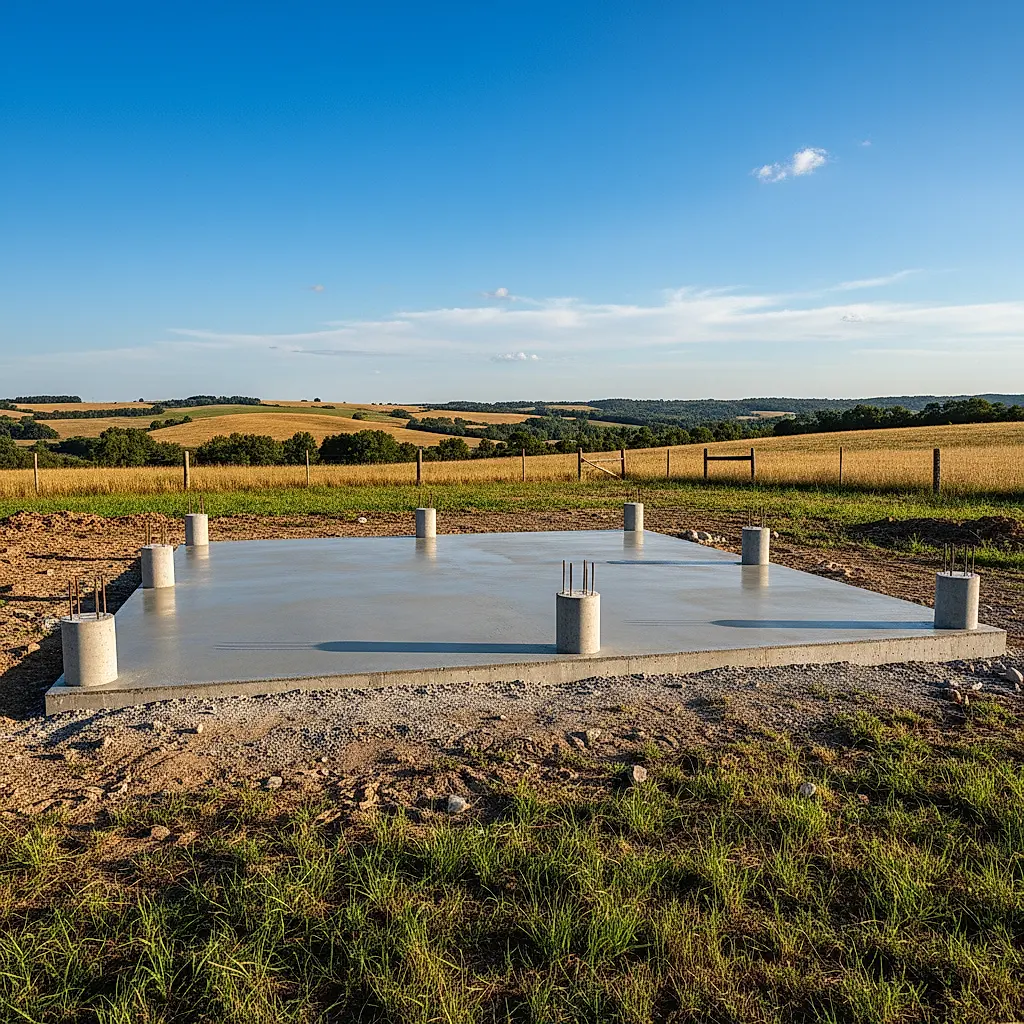
Understand what drives foundation and site preparation costs for shipping containers, how to plan your budget, and what to confirm with your supplier and local authorities.
Why Foundation Costs Vary So Much
If you are planning a shipping container project—whether for storage, a workshop, or a home—one of the first budget questions is often, "What will the foundation cost per square foot?" The honest answer is that there is no single number. Foundation costs depend on your site, your local requirements, and how you intend to use the container. This guide explains the factors that influence cost so you can ask better questions and plan more accurately.
A container is a rigid steel box, but it still needs a stable, level base. The foundation spreads the container's weight, keeps the steel off the ground, and helps prevent twisting or settling. Because every site is different, the cost per square foot can range widely. Instead of quoting a national average, focus on the variables below and get site-specific quotes.
Key Factors That Affect Foundation Cost
Site Conditions and Access
- Slope and soil type: A flat, well-drained gravel pad is usually less expensive than a sloped site that needs excavation or retaining walls. Clay, sand, and rock each behave differently under load.
- Access for equipment: If a truck or crane cannot reach the pad easily, additional labor or equipment may be needed. Confirm access requirements with your delivery team.
- Drainage: Water pooling around a foundation can lead to rust and shifting. Grading and drainage solutions add cost but protect your investment.
Foundation Type
Common options include:
- Gravel or crushed stone pad: Often the most economical. Requires excavation, geotextile fabric, and compacted stone.
- Concrete slab or piers: More expensive but provides a very stable, permanent base. May be required for certain uses or by local code.
- Timber or steel beams on footings: Raises the container for airflow and can simplify leveling on uneven ground.
- Screw piles or helical anchors: Useful in some soil conditions; costs vary by depth and diameter.
Each type has different material and labor costs per square foot. A concrete slab generally costs more per square foot than a gravel pad, but it may reduce long-term maintenance.
Local Codes, Permits, and Inspections
Requirements vary by jurisdiction. Some areas treat container foundations like any other structure; others have specific rules. Permits, engineering letters, and inspections can add to your project cost. Always check with your local building department before construction. Do not assume that a particular foundation type avoids permits—confirm with the authority having jurisdiction.
Container Size and Weight
A larger container distributes more weight over a larger area, but the foundation must still support the total load. The nominal length and width of standard containers are commonly 20 feet and 40 feet, with widths around 8 feet. Height is often 8 feet 6 inches for standard and 9 feet 6 inches for high-cube. These are approximate nominal dimensions; exact specifications vary by manufacturer and should be confirmed on the individual listing or CSC plate. The foundation design must account for the container's weight plus any contents you plan to store.
Labor and Material Prices
Costs for concrete, gravel, lumber, and labor fluctuate by region and season. A quote from one contractor may differ significantly from another. Get at least two or three itemized estimates that separate materials, labor, and equipment.
How to Estimate Your Foundation Budget
Rather than relying on a single cost-per-square-foot figure, build your estimate from the ground up.
- Define the footprint. Measure the area you need to support, including any walkways or anchoring points. A 20-foot container has a nominal footprint of about 160 square feet (20 ft × 8 ft), and a 40-foot container about 320 square feet. These are approximations for planning only.
- Choose a foundation type. Decide between gravel, concrete, piers, or beams based on your use, soil, and local code.
- Get site-specific quotes. Ask contractors to price excavation, base material, compaction, drainage, and any anchoring.
- Add contingencies. Site work often reveals surprises—roots, rock, or poor drainage. A contingency of 10–20% is common in construction budgeting.
- Include permits and engineering. If required, these can be a meaningful line item.
A simple way to compare options is to calculate a rough cost per square foot for each foundation type using local quotes. For example, if a gravel pad quote is $X for 160 square feet, divide to get a per-square-foot figure. Do the same for concrete. This lets you compare apples to apples, but remember that the lowest cost per square foot may not be the best long-term choice.
Site Preparation Checklist
Proper site prep protects your container and can reduce foundation costs by avoiding rework.
- Clear vegetation, roots, and debris from the footprint.
- Verify the site is level within the tolerances recommended by your container supplier or foundation engineer.
- Install drainage to direct water away from the foundation.
- Compact the subgrade before adding base material.
- Use geotextile fabric under gravel to prevent migration and settling.
- Plan for anchoring if high winds are a concern in your area.
- Confirm utility locations before digging.
- Leave space for delivery equipment to maneuver.
Delivery and Placement Considerations
Delivery logistics can affect foundation planning. The container must be placed on the foundation, and the delivery truck or crane needs a safe approach. Confirm with the Newport team what access, surface conditions, and space are required for your specific delivery. Do not assume that a particular foundation type eliminates the need for special equipment—ask.
If the container will be placed on a gravel pad, the pad must be compacted and level before delivery. If it will be placed on piers or beams, ensure the supports are positioned to match the container's corner castings and any intermediate support points recommended by the manufacturer. Incorrect support can lead to door misalignment or structural stress.
Common Mistakes to Avoid
- Skipping a site visit. A foundation plan based only on a photo can miss slope, drainage, or access issues.
- Underestimating soil. Expansive clay or soft ground may require deeper footings or engineered solutions.
- Ignoring local code. Even a simple gravel pad may need a permit or inspection in some areas.
- Forgetting about utilities. If you plan to add power or water, trenching should be coordinated with foundation work.
- Choosing the cheapest option without considering longevity. A slightly more expensive foundation may save money on repairs later.
Frequently Asked Questions
What is the average foundation cost per square foot for a shipping container?
There is no reliable national average because costs depend on site conditions, foundation type, local labor rates, and permit requirements. Instead of using a generic number, get itemized quotes for your specific site and compare them on a per-square-foot basis. Confirm all pricing and availability with the Newport team.
Do I need a concrete foundation for a shipping container?
Not always. Many containers sit on compacted gravel pads or timber beams. However, some uses, local codes, or soil conditions may require a concrete slab or engineered footings. Check with your local building department and a qualified engineer to determine what is appropriate for your project.
How much does it cost to level a shipping container?
Leveling costs vary based on the current site grade, the method used (gravel, piers, beams), and local labor rates. A level base is critical for door operation and structural integrity. Your foundation contractor can provide a quote after reviewing the site. The Newport delivery team can also discuss placement requirements.
Can I install a foundation myself?
Some homeowners install gravel pads or timber foundations as DIY projects. However, you should confirm local permit requirements and ensure the design is adequate for your soil and container load. For concrete or engineered foundations, hiring a qualified contractor is usually safer and may be required by code.
Does a foundation affect container delivery?
Yes. The foundation must be ready and accessible before delivery. The delivery truck or crane needs a safe path and enough space to place the container. Confirm access, surface conditions, and any equipment needs with the Newport team before scheduling delivery.
Next Steps
Planning a container project starts with good information. Review our available containers at our shop to see current listings and specifications. When you are ready to discuss your site, delivery, and foundation questions, contact us and our team will help you understand what to confirm before you build. Always verify listing details, availability, pricing, site access, and delivery requirements directly with Newport Shipping Containers LLC.
Plan the next step
Confirm the container and the delivery plan.
Browse current listings, then speak with the Newport team to verify the unit, total pricing, site access, and delivery requirements before payment.