
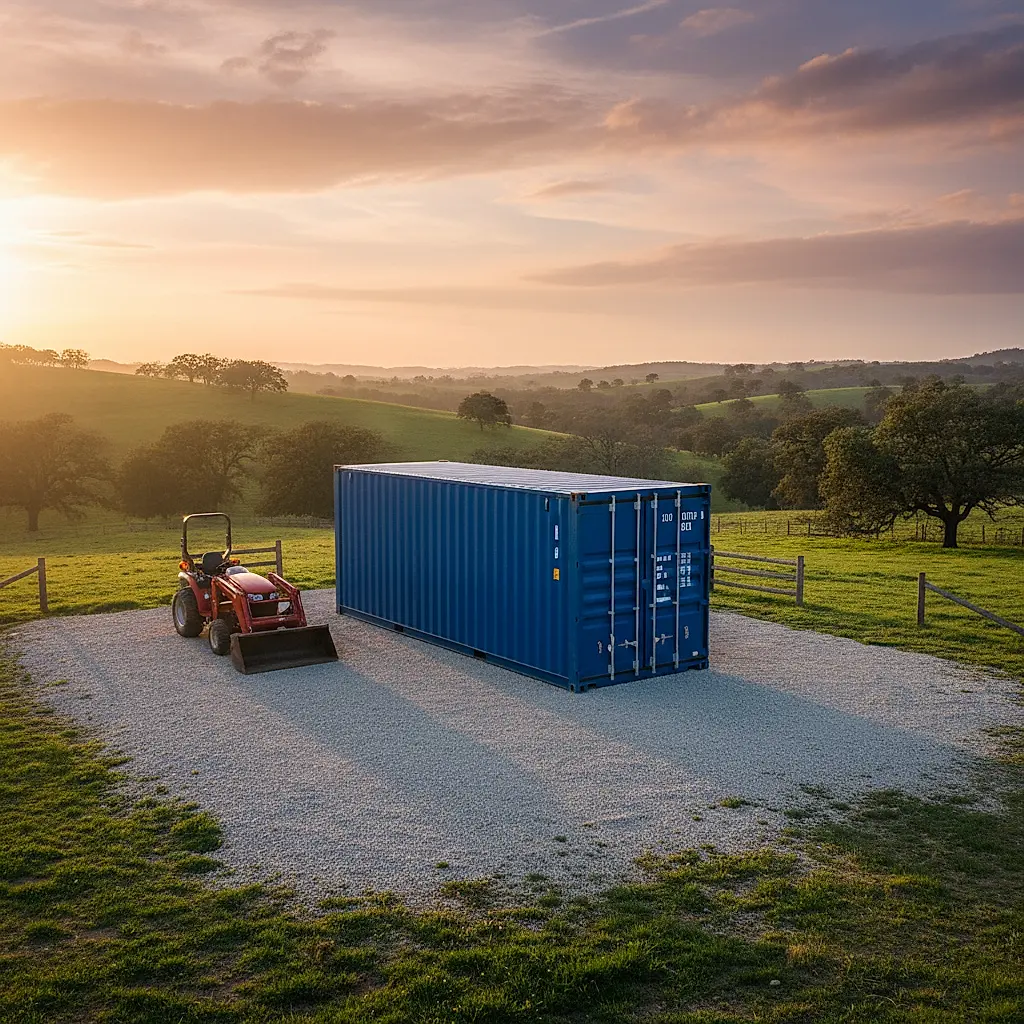
Learn how to choose a shipping container for tractors, ATVs, and farm equipment by comparing nominal dimensions, door openings, and site access. Confirm exact specs with Newport.
Why Container Dimensions Matter for Farm Equipment Storage
Storing tractors, ATVs, UTVs, and implements in a shipping container can protect them from weather, theft, and rodents. But the container that fits your equipment depends on more than length alone. You need to think about interior height, door opening size, and how you will get the machine in and out safely.
Nominal container sizes are a starting point. A 20-foot container is about 20 feet long, and a 40-foot container is about 40 feet long. Standard height containers are roughly 8 feet 6 inches tall on the outside, while high-cube containers are about 9 feet 6 inches tall. Width is generally around 8 feet. These are nominal figures, and actual interior dimensions vary by manufacturer and condition.
This guide explains how to compare container sizes for farm equipment, what to measure on your machine, and what to confirm before you buy. It does not replace the individual listing, the CSC plate, or guidance from the Newport team.
Key Measurements to Compare Before You Buy
When you look at a container listing, focus on the measurements that affect whether your equipment fits and whether you can load it.
Interior length, width, and height
Interior length determines how much equipment you can park end to end. Interior width matters for wide implements, dual wheels, or attachments. Interior height matters for tractors with cabs, roll bars, or exhaust stacks.
Door opening dimensions
A container's door opening is often smaller than its interior. The clear opening width and height are the numbers that decide whether a machine can pass through. A tractor that fits inside may still not fit through the door if it is too tall or too wide at the widest point.
Floor and tie-down points
Container floors are typically wood or plywood over steel cross members. Tie-down rings and wood blocking can help secure equipment during transport and storage. Check the listing for floor condition and any existing tie-down points.
Condition and weather resistance
New, one-trip, and used containers differ in appearance and condition. A used container may have surface rust, dents, or door seal wear. For farm equipment, a wind and watertight container is usually the priority. Ask the Newport team to confirm condition details for the specific unit.
Matching Container Size to Common Farm Equipment
There is no single container size that fits every farm machine. Use the following as a planning framework, then measure your own equipment.
Compact tractors and sub-compact tractors
Many compact tractors with mowers or loaders can fit in a 20-foot container if the door opening and interior height allow. Removing the loader, folding the ROPS, or lowering the exhaust may be necessary. Measure your tractor with the attachments you plan to store.
Utility tractors and row-crop tractors
Larger utility tractors may need a 40-foot container for length. Height can be the limiting factor, especially with a cab. A high-cube container offers more interior height than a standard container, but you still need to confirm the door opening height.
ATVs, UTVs, and side-by-sides
ATVs and UTVs are often shorter and lower than tractors, so a 20-foot container may hold more than one. Measure the width across the tires and the height to the top of the roof or roll cage. Ramps or a slight grade can help with loading, but confirm what is safe for your machine.
Implements and attachments
Plows, mowers, seeders, and trailers have their own dimensions. Some implements can be stored alongside a tractor, while others may need a separate container or a larger unit. Think about how you will arrange everything before you commit to a size.
Loading, Access, and Site Planning
A container is only useful if you can get equipment in and out. Site planning is as important as container dimensions.
Door swing and approach
Container doors swing outward and need clear space in front. You also need a straight approach for tractors and trailers. Confirm the turning radius and surface conditions with the Newport delivery team.
Ground conditions and foundation
Containers are often placed on gravel, concrete, or compacted soil. A level, well-drained base helps doors operate smoothly and reduces settling. Ask about blocking or foundation recommendations for your site.
Delivery access
Delivery trucks need room to maneuver. Overhead lines, trees, gates, and soft ground can affect placement. Share site photos and access details with the Newport team before scheduling delivery.
Ventilation and condensation
Temperature changes can cause condensation inside a steel container. Ventilation options and moisture control may help protect equipment. Discuss your climate and storage duration with the Newport team.
High-Cube vs. Standard Height: What to Know
High-cube containers are taller than standard containers. That extra height can make a difference for tractors with cabs or tall attachments. However, high-cube containers are not available in every size or condition, and the door opening height still matters.
If your equipment is close to the limit, do not rely on nominal height alone. Ask for the actual interior height and door opening height of the specific container you are considering. The CSC plate and listing details are the best sources for exact specifications.
Security, Ventilation, and Equipment Protection
Shipping containers are known for strong steel construction and lockable doors. For farm equipment, security is a major benefit. Consider these points:
- Use heavy-duty locks and consider a lockbox for added protection.
- Keep the container on a level base so doors close and seal properly.
- Check door seals and replace them if they are worn.
- Avoid storing equipment with fuel or fluid leaks that can damage the floor.
- Use moisture absorbers or ventilation if condensation is a concern.
- Keep a clear path inside so you can inspect equipment regularly.
These are general practices. Your specific needs depend on your equipment, climate, and site.
Frequently Asked Questions
What size container fits a tractor?
It depends on the tractor's length, width, and height, including any cab or attachments. A 20-foot container may fit compact tractors, while larger utility tractors may need a 40-foot container. Measure your machine and compare it to the interior and door opening dimensions in the listing. Confirm exact specs with the Newport team.
Can I store an ATV or UTV in a 20-foot container?
Many ATVs and UTVs can fit in a 20-foot container, and some owners store more than one. The key measurements are the overall width, height, and length. Check the door opening and interior dimensions for the specific container you are considering.
Do I need a high-cube container for a tractor with a cab?
A high-cube container offers more interior height, which can help with cab height. However, the door opening height is often the limiting factor. Confirm both interior and door opening dimensions before deciding.
What should I measure on my equipment?
Measure the overall length, width, and height at the tallest point. Include mirrors, exhaust stacks, roll bars, and attachments. Also measure the widest point across tires or duals. Write these numbers down and compare them to the container listing.
Can I load equipment by driving it into the container?
Many tractors and ATVs can be driven or winched into a container using ramps. The approach must be safe, and the container must be on firm, level ground. Discuss loading methods and site access with the Newport team.
Next Steps for Planning Your Storage Container
Start by measuring your equipment and writing down the dimensions. Then review the container listings to compare nominal sizes, interior dimensions, and door openings. If you are unsure, contact the Newport team with your measurements and site details. They can help you confirm availability, pricing, and delivery requirements for your location.
- Browse current container options at our shop.
- Share your equipment dimensions and site access details through our contact page.
A little planning upfront can save time and frustration later. Confirm all specifications, availability, and delivery details with the Newport team before you buy.
Plan the next step
Confirm the container and the delivery plan.
Browse current listings, then speak with the Newport team to verify the unit, total pricing, site access, and delivery requirements before payment.