
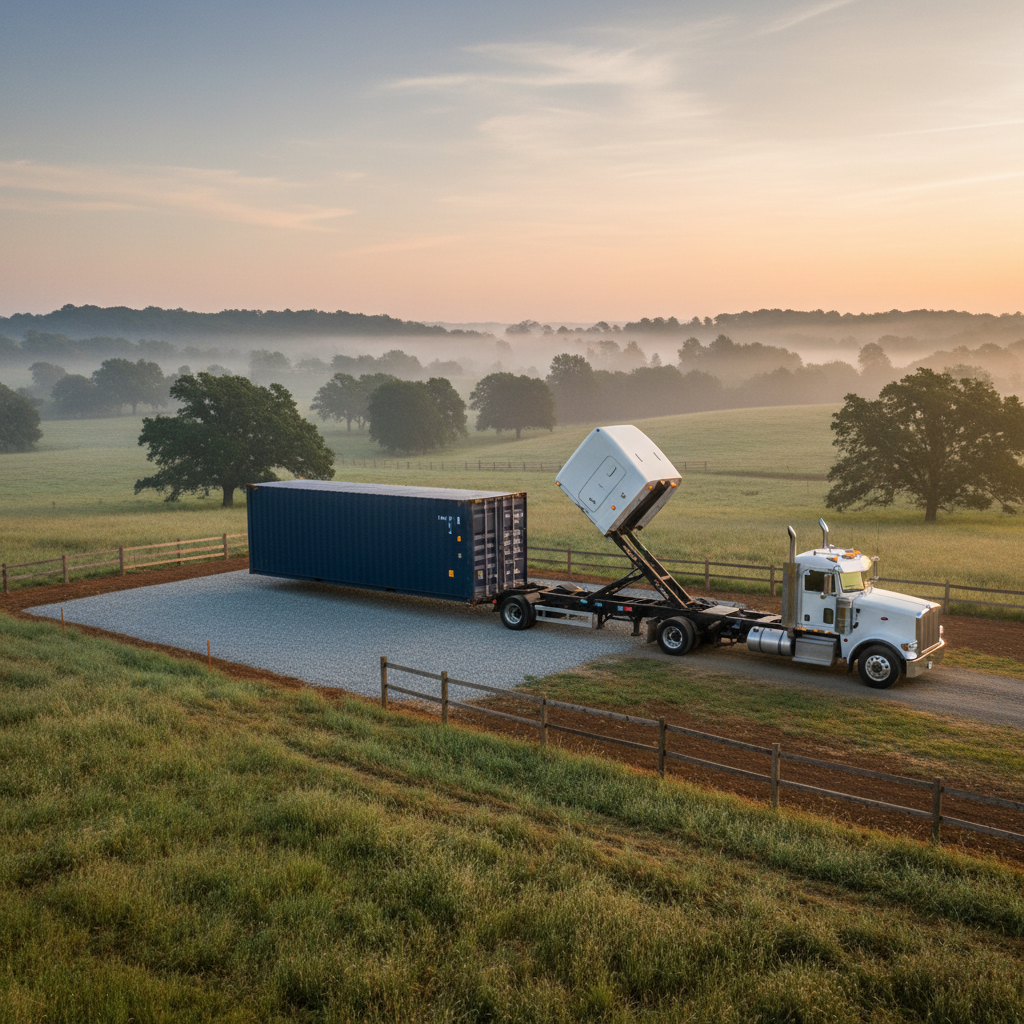
Delivery pricing for shipping containers isn't just a flat per-mile rate. Learn the real factors that shape your quote and how to plan a smooth drop-off.
Why Delivery Pricing Isn't a Simple Per-Mile Number
If you've ever tried to estimate shipping container delivery by multiplying miles by a single rate, you've probably noticed the final quote doesn't match. That's because container delivery is a specialized service, not a standard parcel shipment. The cost reflects the equipment required, the time involved, and the conditions at both the pickup and drop-off locations. Understanding those variables helps you ask better questions and avoid surprises.
This guide explains the factors that typically influence delivery pricing, how to prepare your site, and what to confirm with the Newport team before you book. We won't quote specific rates here because every delivery is different—your exact price depends on your location, container size, and site conditions.
The Main Factors That Shape a Delivery Quote
Distance and Travel Time
Distance matters, but it's not the only number that counts. Carriers consider round-trip travel, drive time, and whether the route involves highways, rural roads, or congested areas. A short trip through difficult terrain can take longer than a longer highway drive. That's why two deliveries of similar mileage can be priced differently.
Container Size and Weight
A 20-foot container and a 40-foot container require different handling. Larger containers may need different trailer configurations and more careful positioning. Weight also plays a role: an empty container is one thing, but a loaded or modified container changes the equipment and planning needed. Always confirm the exact specifications of the unit you're considering with the Newport team.
Delivery Equipment
Different trailers serve different purposes. A flatbed trailer is common for many container deliveries, while a tilt-bed or roll-off trailer may be used in situations where the container needs to be slid or tilted into place. The equipment choice depends on your site access, the container's position, and the driver's assessment. You don't need to specify the equipment yourself—just describe your site accurately so the right setup can be arranged.
Site Access and Ground Conditions
This is where many quotes change. Drivers need room to maneuver, turn around, and set the container down safely. Narrow driveways, low branches, soft ground, steep slopes, and parked vehicles can all complicate delivery. If a driver can't safely reach the drop point, the container may need to be placed farther away, or the delivery may need to be rescheduled with different equipment. Being upfront about your site helps everyone plan.
Permits and Local Requirements
Some jurisdictions require permits for placing a container on public property or for oversized loads on certain roads. Requirements vary widely by location, so it's important to check with your local authority. Newport can share general information, but the responsibility for confirming local rules typically falls to the property owner. Don't assume a permit is or isn't needed—verify it.
Timing and Scheduling
Delivery windows, seasonal demand, and scheduling flexibility can affect pricing. If you have some flexibility on the delivery date, let the team know. Peak periods may be busier, and off-peak scheduling sometimes allows for more efficient routing.
How to Prepare Your Site for a Smooth Delivery
A little preparation goes a long way. Use this checklist as a starting point, and confirm specific requirements with the Newport team.
- Clear the path: Remove vehicles, trash bins, and other obstacles from the driveway and turn-around area.
- Check overhead clearance: Look for low branches, power lines, and wires that could interfere with a tall trailer.
- Firm up the ground: Soft soil, mud, or recent rain can make it unsafe for heavy equipment. Consider a gravel or paved pad if the ground is unreliable.
- Mark the drop spot: Use stakes or cones to show exactly where you want the container. Make sure it's level and accessible.
- Measure your space: Confirm the container will fit where you intend to place it, including room to open doors and work around it.
- Communicate: Tell the team about any gates, tight turns, weight restrictions, or special conditions.
If you're unsure whether your site is suitable, ask for a pre-delivery review. It's better to identify issues early than to have a driver arrive and be unable to complete the drop.
Understanding the Difference Between Flatbed and Tilt-Bed Delivery
You may hear the terms "flatbed" and "tilt-bed" when discussing container delivery. In general:
- Flatbed delivery involves a standard flatbed trailer. The container is typically loaded and unloaded with a crane or a specialized container handler, depending on the setup.
- Tilt-bed delivery uses a trailer that can tilt to slide the container off. This can be useful in certain site conditions, but it also has its own space and ground requirements.
The right method depends on your site, the container, and the equipment available. Newport will determine the appropriate approach based on the details you provide. Don't assume one method is always cheaper or better—ask what's recommended for your situation.
What to Confirm Before You Book
Before finalizing a delivery, make sure you have clear answers to these questions:
- What is the exact container size and type? (Check the listing and the CSC plate for specifications.)
- What is the delivery address and the specific drop point?
- Are there any access limitations (gates, low wires, narrow roads, soft ground)?
- Are permits required for placement on public property or for oversized loads?
- What is the expected delivery window, and is there flexibility?
- Who is responsible for site preparation and any necessary equipment?
- What happens if the driver cannot safely complete the delivery?
Getting these details right helps avoid additional fees, delays, and frustration.
Why You Won't See a Fixed Per-Mile Rate Here
Publishing a single per-mile rate would be misleading. Delivery pricing depends on the combination of factors above, and a quote that works for one site may not apply to another. Instead of guessing, contact the Newport team with your specific address and site details. They can provide a quote based on your actual circumstances.
If you're comparing options, focus on the total delivered cost and the service included—not just a mileage number. A slightly higher quote that includes careful site assessment and the right equipment may save you time and trouble in the long run.
Frequently Asked Questions
How is shipping container delivery cost calculated?
Delivery cost is typically based on distance, container size, site access, equipment needs, and scheduling. Because these factors vary, the best way to get an accurate number is to request a quote with your specific address and site details. Newport can walk you through what applies to your situation.
Do I need a permit to have a container delivered?
Permit requirements vary by location and depend on where the container will be placed and how it will be transported. Some areas require permits for containers on public property or for oversized loads. Check with your local authority to confirm what applies to you. Newport can share general guidance but cannot determine local rules for you.
What if my site is difficult to access?
Tell the Newport team about any narrow roads, low branches, soft ground, or tight turns. They can assess whether special equipment or an adjusted drop point is needed. In some cases, a site visit or additional planning may be required. Being upfront helps avoid failed deliveries.
Can I schedule delivery for a specific date?
Scheduling depends on availability and routing. While specific dates may be possible, flexibility can sometimes make the process smoother. Discuss your preferred timing with the Newport team, and they will let you know what can be arranged.
What should I do if I'm not sure my site is ready?
Ask for guidance before delivery day. The team can review your site details and suggest preparations, such as clearing obstacles or improving ground conditions. If needed, they may recommend a different approach or timing. It's better to address concerns early.
Next Steps: Get a Quote Tailored to Your Site
Ready to move forward? Start by browsing available containers at our shop to find the size and type that fits your project. Then reach out via our contact page with your delivery address and site details. The Newport team will help you understand what delivery involves for your specific location and answer any questions you have. With the right information upfront, you can plan a smooth, predictable delivery.
Plan the next step
Confirm the container and the delivery plan.
Browse current listings, then speak with the Newport team to verify the unit, total pricing, site access, and delivery requirements before payment.