
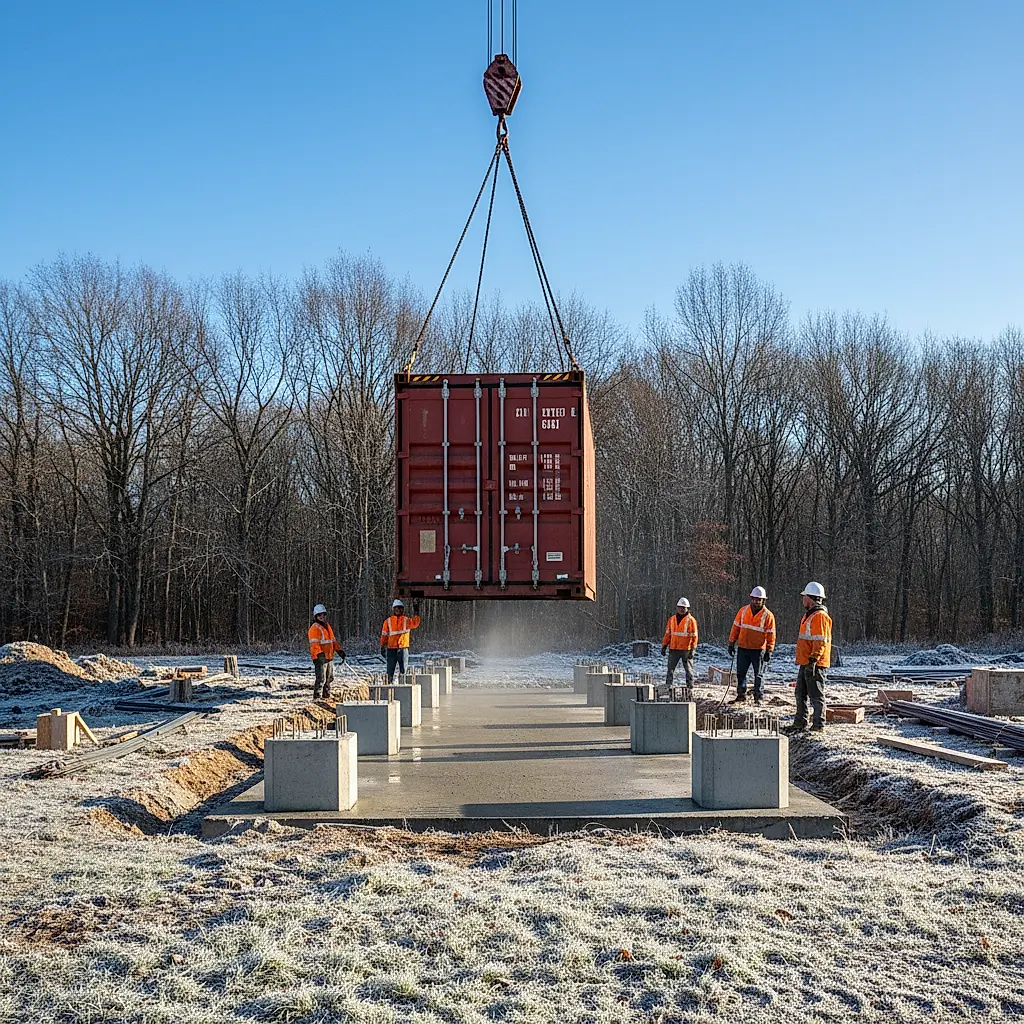
Cold-weather site preparation for shipping containers starts with understanding frost, drainage, and load paths. This guide walks through common foundation approaches and the questions to ask before you commit.
A shipping container is a rigid steel box, but the ground beneath it is rarely rigid in winter. Frost heave, thaw cycles, and poor drainage can shift a container out of level, stress door frames, and create safety issues long before the structure itself shows wear. The right foundation depends on your soil, your climate, your intended use, and how permanent you want the installation to be.
This guide covers the main foundation categories used in cold climates, how to think about each one, and what to confirm with the Newport team before ordering. It does not replace a site-specific evaluation by a qualified local engineer or contractor.
Why Winter Changes the Foundation Conversation
In warm months, almost any firm, level surface can seem adequate. Winter exposes weaknesses that were always present.
Frost heave and thaw weakening
When soil freezes, moisture in the ground expands and can lift whatever sits on top of it. When it thaws, that support can soften or settle unevenly. The result is a container that tilts, rocks, or twists. Over repeated seasons, that movement can affect door operation and the integrity of any modifications you have made.
Not every site experiences significant frost movement. Soil type, water table, snow cover, and how deeply the ground freezes all matter. A local engineer or experienced site contractor can tell you what is realistic for your parcel.
Drainage is part of the foundation
A foundation that holds water is a foundation that will move. Snowmelt and winter rain need somewhere to go. Grading, surface water diversion, and the elevation of the container above grade all influence how much water reaches the soil under the unit.
What you are actually supporting
An empty container and a loaded container present very different demands. Storage, a workshop, or an occupied structure each change how much weight the foundation must carry and how sensitive the installation is to movement. Be clear with yourself and with any contractor about the intended use before choosing a foundation type.
Common Foundation Options for Cold Climates
These categories are not ranked. Each has situations where it makes sense and situations where it does not.
Gravel pad or compacted aggregate
A properly prepared gravel pad is one of the most common approaches for temporary and semi-permanent placements. It spreads load, drains reasonably well when built correctly, and can be adjusted or removed.
Considerations:
- Excavation depth and base preparation matter more than the gravel itself.
- Edge containment helps prevent the pad from spreading.
- A geotextile fabric can reduce migration of fine soil into the aggregate.
- In frost-susceptible soils, a shallow pad may still move seasonally.
A gravel pad is often a reasonable starting point for storage use. Whether it is adequate for your site is a question for a local professional.
Concrete piers or sonotubes
Concrete piers, including those formed with sonotubes, can extend below the frost line where local codes and practice call for it. This can reduce frost movement compared with surface-only support.
Considerations:
- Frost depth varies widely by region and must be confirmed locally.
- Pier spacing and sizing should be designed for the load.
- Piers must be level and aligned with the container's structural points.
- Reinforcement and mix design affect long-term performance.
This approach is often chosen when a more permanent installation is planned.
Helical piles
Helical piles are screw-in steel foundations that can be installed in many soil conditions with relatively little excavation. They can be engineered for specific loads and can sometimes be adjusted after installation.
Considerations:
- Installation typically requires specialized equipment and an experienced installer.
- Capacity depends on soil conditions and pile design.
- Corrosion protection and local requirements should be reviewed.
- Cost and availability vary by market.
Helical piles are frequently discussed for cold-climate projects because installation can be less disruptive than poured concrete, but they are not automatically the right answer for every site.
Timber or concrete block cribbing
Cribbing made from rated timbers or concrete blocks is sometimes used for temporary or low-cost support. It can work, but it demands careful attention.
Considerations:
- Timbers in contact with soil can rot over time.
- Block cribbing can shift if not properly interlocked and bedded.
- Frost movement can displace even well-built cribbing.
- This approach is generally best treated as temporary.
Slab or grade beam systems
A reinforced slab or grade beam system is a more substantial investment. It can provide a stable, level surface and may integrate with other site work.
Considerations:
- Design should account for frost and drainage.
- Curing time and weather conditions affect scheduling.
- This option is typically considered when the container is part of a long-term plan.
Matching the Foundation to Your Use and Timeline
There is no single best foundation. There is a best fit for your circumstances.
Short-term storage
If the container will be used for storage and may be relocated, a well-built gravel pad or another removable system may be appropriate. The priority is level support and drainage, not permanence.
Long-term storage or workshop
If the container will stay in place for years and you will work inside it, movement becomes more than an inconvenience. A more engineered foundation is often worth discussing with a local professional.
Occupied or modified containers
If the container will be insulated, wired, plumbed, or occupied, the foundation becomes part of a larger building system. Local building authorities may have requirements that apply. Confirm those requirements before you build.
Sites with challenging soils
Clay, expansive soils, fill, or high water tables can complicate any foundation choice. In these cases, a site-specific evaluation is especially valuable.
Site Preparation Questions to Answer Before Delivery
Good outcomes usually start with good questions. Write down your answers and share them with the Newport team and any contractor you hire.
- What is the slope of the site, and where does water currently flow?
- What is the soil like, and has it been disturbed or filled?
- How deep does frost typically penetrate in your area?
- What will the container hold, and will it be occupied?
- How long do you expect the container to stay in place?
- Is there clear access for delivery equipment, and are there overhead obstructions?
- Are there local permits, setbacks, or HOA rules that apply?
- Who will verify that the foundation is level before and after placement?
Confirm site access, delivery requirements, and scheduling details with the Newport team. Delivery equipment and access needs vary by location and cannot be assumed.
Maintenance and Seasonal Checks
A foundation is not a one-time decision. It benefits from periodic attention.
- Check for standing water near the container after storms and snowmelt.
- Look for new gaps, tilting, or door alignment changes.
- Keep the area around the foundation clear of debris and vegetation.
- Re-level or adjust support only with appropriate guidance.
- Document changes with photos so you can track movement over time.
If you notice significant movement, consult a qualified local professional rather than attempting a fix without understanding the cause.
Frequently Asked Questions
Do I need a foundation for a shipping container in winter?
In most cases, yes. A container needs level, stable support to function well, and winter conditions can expose inadequate support. The type of foundation depends on your soil, climate, use, and how long the container will stay in place. Confirm site-specific requirements with a local professional and with the Newport team.
Can I place a container directly on the ground?
Placing a container directly on soil is generally not recommended for anything beyond very short-term, low-demand use. Direct soil contact can trap moisture, promote corrosion, and provide uneven support. Even a simple prepared base is usually a better starting point. Discuss your specific situation before deciding.
How do I know if frost will affect my container?
Frost depth and frost susceptibility vary by region and soil. A local engineer, building official, or experienced site contractor can help you understand what is typical for your area. Do not assume that a method used in another climate will perform the same way on your site.
Does a container foundation require a permit?
Permit requirements depend on your location, the intended use, and local regulations. Some jurisdictions regulate foundations, occupied structures, and utility connections. Others may not require a permit for simple storage. Check with your local authority before you build, and confirm any listing or delivery details with the Newport team.
What should I confirm with Newport before delivery?
Confirm the specific listing details, availability, pricing, site access, and delivery requirements with the Newport team. Every site is different, and delivery planning depends on local conditions. Ask questions early so there are no surprises on delivery day.
Next Steps
Start by defining how you will use the container and how long it will stay in place. Then gather local information about soil, frost, drainage, and permits. With those answers in hand, you can choose a foundation approach with more confidence.
Browse available units at our shop and reach out to the Newport team at our contact page to discuss your project, confirm listing details, and plan delivery. We are happy to help you think through the questions that matter before you commit.
Plan the next step
Confirm the container and the delivery plan.
Browse current listings, then speak with the Newport team to verify the unit, total pricing, site access, and delivery requirements before payment.